Introduction
Traditional Catholicism is the faithful preservation of the Catholic faith as it has been handed down from the Apostles through Sacred Scripture, Sacred Tradition, and the perennial Magisterium of the Church.
In an age marked by doctrinal uncertainty and liturgical confusion, many souls seek clarity. This beginner’s guide to Traditional Catholicism introduces the foundations of the faith as safeguarded by the Church throughout the centuries — especially as expressed in the Council of Trent, the Roman Catechism, the Fathers of the Church, and the sacred liturgy known as the Mass of the Ages.
Traditional Catholicism does not propose novelty.
It proposes fidelity.
As Saint Jude exhorts the faithful:
“Contend earnestly for the faith once delivered to the saints” (Jude 1:3).
Source: Douay-Rheims Bible
https://www.drbo.org/chapter/72001.htm
What Is Traditional Catholicism?
Traditional Catholicism is the living transmission of divine revelation entrusted to the Apostles and preserved by the Church under the guidance of the Holy Ghost.
It rests upon three inseparable pillars:
- Sacred Scripture
- Sacred Tradition
- The perennial Magisterium
The Council of Trent solemnly affirmed that saving truth and moral discipline are contained “in written books and unwritten traditions” received from the Apostles.¹
https://www.newadvent.org/cathen/15030c.htm
Traditional Catholicism, therefore, maintains that:
- Revelation is complete in Christ.
- Doctrine cannot contradict prior definitions.
- The Church guards truth; she does not reinvent it.
This fidelity safeguards unity and preserves clarity.
Why It Matters
Our Lord declared:
“Heaven and earth shall pass away, but my words shall not pass away” (Matthew 24:35).
https://www.drbo.org/chapter/48024.htm
If Christ’s words endure, their meaning cannot be surrendered to shifting philosophies.
Traditional Catholicism protects:
- The sacrificial nature of the Holy Mass
- The Real Presence of Christ in the Eucharist
- The objective moral law
- The sacred character of the priesthood
- Devotion to the Blessed Virgin Mary
Without doctrinal stability, faith weakens.
Without reverence, belief erodes.
Who This Guide Serves
This guide serves:
- Clergy and seminarians seeking doctrinal continuity
- Traditional Catholics devoted to the Mass of the Ages
- Marian devotees devoted to the Immaculate Heart
- Families desiring clear catechesis
- Souls seeking certainty amid theological confusion
Traditional Catholicism nourishes those who desire fidelity rather than innovation.
Theological and Historical Foundations
Sacred Scripture as Foundation
Sacred Scripture itself commands fidelity to Tradition.
Saint Paul writes:
“Therefore, brethren, stand fast; and hold the traditions which you have learned, whether by word, or by our epistle” (2 Thessalonians 2:14).
https://www.drbo.org/chapter/60002.htm
Revelation was transmitted both orally and in writing. The Church existed before the New Testament canon was complete. Scripture presupposes Tradition.
The Witness of the Fathers
The Fathers of the Church consistently defended continuity.
Saint Vincent of Lérins articulated a principle of authentic development: doctrine may grow, but only “in the same sense and the same judgment.”²
https://www.newadvent.org/fathers/3506.htm
This principle safeguards the Church from doctrinal rupture.
Saint Augustine likewise warned that novelty in doctrine fractures unity.³
https://www.newadvent.org/fathers/1302.htm
The Council of Trent and the Roman Catechism
During the crisis of the sixteenth century, the Council of Trent did not invent new teaching. It clarified ancient doctrine concerning:
- The Holy Sacrifice of the Mass
- The Sacraments
- Justification
- Sacred Scripture and Tradition
Its teaching on the Mass solemnly affirms that it is truly and properly a sacrifice.⁴
https://www.newadvent.org/cathen/09789c.htm
The Roman Catechism, issued after Trent, presents Catholic doctrine with clarity and precision for pastors and faithful alike.⁵
https://www.newadvent.org/cathen/13164a.htm
The Mass of the Ages
The Traditional Latin Mass — often called the Mass of the Ages — was the normative Roman Rite for centuries until 1970.
It is centered upon:
- The sacrificial renewal of Calvary
- Reverence and silence
- Orientation toward God
- The transcendent mystery of the Eucharist
Christ declared:
“This is my body… this is my blood” (Matthew 26:26–28).
https://www.drbo.org/chapter/47026.htm
Traditional liturgy safeguards this sacrificial theology through gesture, language, and sacred silence.
The Mass forms belief.
Lex orandi, lex credendi — the law of prayer shapes the law of belief.
Marian Devotion at the Heart of Tradition
Traditional Catholicism is deeply Marian.
The Blessed Virgin Mary stands as:
- Mother of God
- Immaculate Conception
- Model of obedience
- Spiritual Mother of the faithful
At the Annunciation she declared:
“Behold the handmaid of the Lord; be it done to me according to thy word” (Luke 1:38).
https://www.drbo.org/chapter/49001.htm
Her fiat is the model of fidelity in times of confusion.
Throughout history, renewal in the Church has come through deeper devotion to the Immaculate Heart.
Why Traditional Catholicism Matters Today
The modern age is marked by rapid change, moral uncertainty, and theological ambiguity. Many voices propose reinterpretation of doctrine in light of contemporary sensibilities. Yet divine revelation is not subject to revision.
Sacred Scripture teaches that the Church is:
“The pillar and ground of the truth” (1 Timothy 3:15).
https://www.drbo.org/chapter/62003.htm
If the Church is the pillar of truth, she must preserve what she has received. Authentic renewal does not arise from innovation, but from fidelity.
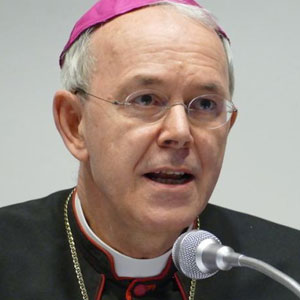
Bishop Athanasius Schneider has consistently emphasized that the crisis of our time is not solved by adaptation to the spirit of the age, but by deeper adherence to the deposit of faith. The Church renews herself by returning to her sources: Scripture, Tradition, and reverent liturgy.
In times of confusion, continuity becomes a safeguard.
Continuity Amid Contemporary Confusion
The modern world frequently treats truth as fluid and morality as negotiable. Personal preference is often elevated above divine law. Yet Christ remains:
“Jesus Christ, yesterday, and today; and the same for ever” (Hebrews 13:8).
https://www.drbo.org/chapter/65013.htm
If Christ does not change, the truth He revealed cannot change in substance.
Traditional Catholicism responds to contemporary instability by affirming:
- The objective nature of dogma
- The permanence of moral law
- The sacrificial character of the Mass
- The Real Presence of Christ in the Eucharist
- The hierarchical structure established by Christ
The First Vatican Council solemnly declared that the meaning of dogmatic definitions must always be retained and never abandoned under the pretext of deeper understanding.⁶
https://www.newadvent.org/cathen/07790a.htm
This teaching protects the faithful from doctrinal rupture.
The Spiritual Fruits of Fidelity
Fidelity to Tradition bears spiritual fruit.
When worship is reverent, the soul grows in humility.
When doctrine is clear, conscience is strengthened.
When moral teaching is stable, families flourish.
Saint Paul exhorts the faithful:
“Watch ye, stand fast in the faith, do manfully, and be strengthened” (1 Corinthians 16:13).
https://www.drbo.org/chapter/53016.htm
To stand fast requires clarity. To persevere requires rootedness.
Traditional Catholicism fosters:
- Interior peace through doctrinal certainty
- Eucharistic reverence
- Devotion to the Rosary
- Confidence in the Church’s perennial teaching
This stability is not rigidity. It is spiritual anchoring.
Frequently Asked Questions
Is Traditional Catholicism opposed to the authority of the Pope?
No. Traditional Catholicism affirms papal authority as defined by the First Vatican Council.⁶ Papal authority exists to safeguard the deposit of faith, not to contradict what has always been taught.
Is the Traditional Latin Mass the only valid form of the Mass?
The Church recognizes the validity of the Mass when celebrated according to approved rites. Traditional Catholics hold that the Mass of the Ages more clearly expresses the sacrificial theology defined by the Council of Trent.⁴
Does fidelity to Tradition reject legitimate development?
No. Authentic development deepens understanding while preserving meaning. As Saint Vincent of Lérins taught, growth must occur in the same sense and the same judgment.²
Why emphasize Marian devotion in Traditional Catholic life?
Because the Blessed Virgin Mary is inseparable from the mystery of Christ. Her obedience at the Annunciation made possible the Incarnation. Devotion to her Immaculate Heart strengthens fidelity to her Son.
How can a beginner grow in Traditional Catholicism?
- Attend the Traditional Latin Mass reverently.
- Study the Roman Catechism.
- Read the Church Fathers and Doctors.
- Pray the Rosary daily.
- Practice devotion to the Immaculate Heart of Mary.
Growth in Tradition is growth in Christ.
Final Exhortation
Traditional Catholicism is not a movement of nostalgia. It is a posture of fidelity.
The faith has been delivered. It must be guarded.
The liturgy has been handed down. It must be celebrated with reverence.
Doctrine has been defined. It must be preserved in clarity.
In every age, the Church flourishes when she remains rooted in what she has received.
May the faithful stand firm in the truth of Christ, grow in devotion to His Blessed Mother, and persevere in reverent worship of the Holy Sacrifice of the Mass.
May the Reign of Mary come.
Adveniat Regnum Mariae!
Begin your journey into the traditional faith with clarity and confidence by exploring our Q&A with Bishop Athanasius Schneider: https://www.gloriadei.io/q-and-a/
Footnotes
- Council of Trent, Session IV, Decree Concerning the Canonical Scriptures (1546).
https://www.newadvent.org/cathen/15030c.htm - Saint Vincent of Lérins, Commonitorium.
https://www.newadvent.org/fathers/3506.htm - Saint Augustine, On the Morals of the Catholic Church.
https://www.newadvent.org/fathers/1302.htm - Council of Trent, Session XXII, Doctrine on the Sacrifice of the Mass (1562).
https://www.newadvent.org/cathen/09789c.htm - Roman Catechism of the Council of Trent (Catechism of the Council of Trent).
https://www.newadvent.org/cathen/13164a.htm - First Vatican Council, Pastor Aeternus (1870).
https://www.newadvent.org/cathen/07790a.htm - Holy Bible, Douay-Rheims Version. Jude 1:3.
https://www.drbo.org/chapter/72001.htm - Holy Bible, Douay-Rheims Version. Matthew 24:35.
https://www.drbo.org/chapter/48024.htm - Holy Bible, Douay-Rheims Version. 2 Thessalonians 2:14.
https://www.drbo.org/chapter/60002.htm - Holy Bible, Douay-Rheims Version. Matthew 26:26–28.
https://www.drbo.org/chapter/47026.htm - Holy Bible, Douay-Rheims Version. Luke 1:38.
https://www.drbo.org/chapter/49001.htm - Holy Bible, Douay-Rheims Version. 1 Timothy 3:15.
https://www.drbo.org/chapter/62003.htm - Holy Bible, Douay-Rheims Version. Hebrews 13:8.
https://www.drbo.org/chapter/65013.htm - Holy Bible, Douay-Rheims Version. 1 Corinthians 16:13.
https://www.drbo.org/chapter/53016.htm
Bibliography
Sacred Scripture
Holy Bible. Douay-Rheims Version.
https://www.drbo.org
Ecumenical Councils
Council of Trent. Session IV, Decree Concerning the Canonical Scriptures (1546).
https://www.newadvent.org/cathen/15030c.htm
Council of Trent. Session XXII, Doctrine on the Sacrifice of the Mass (1562).
https://www.newadvent.org/cathen/09789c.htm
First Vatican Council. Pastor Aeternus (1870).
https://www.newadvent.org/cathen/07790a.htm
Catechisms
Roman Catechism of the Council of Trent.
https://www.newadvent.org/cathen/13164a.htm
Fathers and Doctors of the Church
Saint Augustine. On the Morals of the Catholic Church.
https://www.newadvent.org/fathers/1302.htm
Saint Vincent of Lérins. Commonitorium.
https://www.newadvent.org/fathers/3506.htm
May the Reign of Mary come.
Adveniat Regnum Mariae!