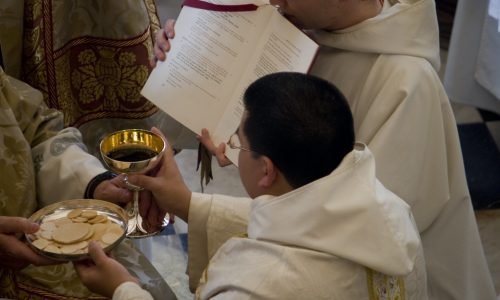
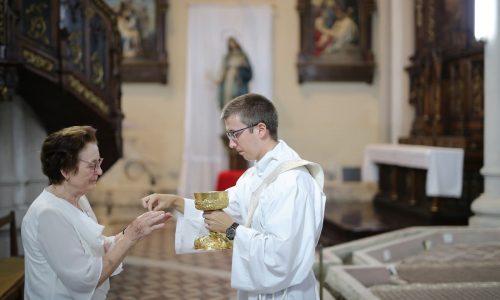
Bishop Schneider said communion in the hand may risk loss of particles. He stated a priest can refuse it in conscience, even accepting suspension, to preserve Eucharistic reverence.
Bishop Schneider criticized altar girls and extraordinary ministers, calling them Protestantizing and untraditional. He said Communion should normally be given by priests, except in persecution or extraordinary necessity.
Bishop Schneider said baptism remains valid even if one leaves the Church, requiring profession of faith upon return, and marriage with non-Catholics needs Church permission or dispensation.
Bishop Schneider said at least 10 minutes of thanksgiving after Communion is traditional, using prayers or silent interior conversation with the Lord, depending on personal devotion and interior disposition.
Bishop Schneider said mortal sins must be confessed by number, circumstances, and type per the Council of Trent, while venial sins are not required but may aid purification.
Bishop Schneider said genuflecting during processions is not a universal rubric, though local customs may exist. He stressed distinguishing reverence for the cross, priest, and Blessed Sacrament.
Bishop Schneider said priests, consecrated at ordination, normally handle the Blessed Sacrament. Lay people may do so only in extraordinary persecution or absence of priests, unlike normal present-day conditions.
Bishop Schneider said Mass may be broadcast for the sick, but it is not real participation. Priests may broadcast, but lay broadcasting risks reducing reverence for the Blessed Sacrament.
Bishop Schneider said tabernacle opening needs bishop permission because it involves the Holy Sacrament. It may be allowed in enclosed communities but is inappropriate for broadcast, lacking reverence for Eucharist.
Bishop Schneider said people should pray, make sacrifices, and lovingly correct others in error without approving sin, urging them to accept God’s grace and commandments for salvation and happiness.
Bishop Schneider said SSPX attendees have no schismatic intention and no objective schism exists, as they do not seek separation from the Pope or form a parallel church.
Bishop Schneider said the Holy See declared SSPX consecrations lack papal mandate and warned of excommunication. He questioned schism definitions, cited canon law history, and argued SSPX is not schismatic.
Bishop Schneider said the Society of Pius X is Catholic, not schismatic, and stated attendance at SSPX Masses fulfills Sunday obligations because they recognize the Pope and profess Catholic faith.
Bishop Schneider said female clergy contradict the Church’s divine constitution and stated the Catholic Church must not give ambiguous signs supporting efforts to introduce female ordinations.
Bishop Schneider criticized Vatican gestures toward Lady Archbishop Mullally, saying they confuse Catholics about female and Anglican ordinations and fail to clearly uphold longstanding Catholic teaching rejecting such ordinations.