Introduction
Traditional Catholic language is not ornamental. It is doctrinal. Each term developed within the life of the Church to safeguard revealed truth and preserve theological precision.
In times of confusion, clarity of language protects clarity of faith.
Sacred Scripture exhorts the faithful:
“Hold the traditions which you have learned, whether by word, or by our epistle” (2 Thessalonians 2:14).
https://www.drbo.org/chapter/60002.htm
The vocabulary of Traditional Catholicism flows from this command. It is the language of what has been handed down.
This guide explains essential Traditional Catholic terms so that the faithful may understand not only their definitions, but their doctrinal foundations and spiritual significance.
What This Guide Is
This guide is a catechetical resource explaining key Traditional Catholic terms in light of:
- Sacred Scripture
- Sacred Tradition
- The Council of Trent
- The Roman Catechism
- The perennial Magisterium
It does not propose new theology. It transmits what the Church has received.
The Council of Trent solemnly affirmed that saving truth and moral discipline are contained in written books and unwritten traditions received from the Apostles.¹
https://www.newadvent.org/cathen/15030c.htm
Traditional Catholic terminology arises from this living transmission.
Why It Matters
Words shape belief. When theological language becomes vague, doctrine becomes unstable.
The First Vatican Council declared that dogmas must always be understood in the sense once declared by the Church and never abandoned under the pretext of deeper understanding.²
https://www.newadvent.org/cathen/07790a.htm
Precise terminology protects this continuity.
Traditional Catholic terms such as Transubstantiation, Sacrifice of the Mass, and Deposit of Faith were not invented for complexity. They were forged in doctrinal struggle to defend revealed truth.
To understand these terms is to understand the structure of Catholic belief.
Who This Guide Serves
This guide serves:
- Clergy and seminarians seeking doctrinal precision
- Traditional Catholics desiring clarity
- Converts encountering classical Catholic theology
- Marian devotees seeking deeper theological formation
- Families catechizing their children
To know the language of the Church is to enter more deeply into her faith.
Theological and Historical Background
The Language of the Fathers
The early Fathers of the Church employed precise terminology to defend the divinity of Christ and the reality of the sacraments.
Saint Vincent of Lérins articulated the principle that doctrine must develop “in the same sense and the same judgment.”³
https://www.newadvent.org/fathers/3506.htm
This principle explains why terminology becomes more exact over time: not to alter meaning, but to defend it.
The Councils and Doctrinal Precision
Ecumenical councils clarified terminology in response to error.
The Council of Nicaea used the term consubstantial to affirm the divinity of Christ.
https://www.newadvent.org/cathen/11044a.htm
The Council of Trent used the term transubstantiation to define the change of bread and wine into the Body and Blood of Christ.⁴
https://www.newadvent.org/cathen/14774a.htm
Such terms safeguard the revealed truth from distortion.
Core Traditional Catholic Terms
The Mass of the Ages
The Mass of the Ages refers to the Traditional Latin Mass — the Roman Rite as organically developed and celebrated for centuries prior to 1970.
It emphasizes:
- The sacrificial renewal of Calvary
- Reverence and sacred silence
- Orientation toward God
The Council of Trent defined that the Mass is truly and properly a sacrifice.⁵
https://www.newadvent.org/cathen/09789c.htm
The term expresses continuity, not nostalgia.
Sacred Tradition
Sacred Tradition is the living transmission of divine revelation entrusted to the Apostles and handed down through the Church.
Saint Paul commands:
“Stand fast; and hold the traditions which you have learned” (2 Thessalonians 2:14).
Tradition is not human custom. It is divine inheritance.
The Deposit of Faith
The Deposit of Faith refers to the totality of revelation given by Christ to the Apostles.
Saint Jude writes:
“Contend earnestly for the faith once delivered to the saints” (Jude 1:3).
https://www.drbo.org/chapter/72001.htm
This deposit is complete. The Church guards it; she does not expand it.
Transubstantiation
Transubstantiation is the term defined by the Council of Trent to describe the change whereby the substance of bread and wine becomes the Body and Blood of Christ.⁴
Though the appearances remain, the substance is changed by divine power.
Christ Himself declared:
“My flesh is meat indeed: and my blood is drink indeed” (John 6:56).
https://www.drbo.org/chapter/50006.htm
This term protects belief in the Real Presence.
Ad Orientem
Ad orientem means “toward the East.” In the Traditional Latin Mass, priest and faithful face the same direction — symbolically toward Christ.
This posture expresses a common orientation toward God rather than toward one another.
It is a theological statement enacted in gesture.
The Perennial Magisterium
The perennial Magisterium refers to the consistent and enduring teaching authority of the Church across centuries.
The Church is called:
“The pillar and ground of the truth” (1 Timothy 3:15).
https://www.drbo.org/chapter/62003.htm
Perennial teaching safeguards unity and prevents doctrinal rupture.
Additional Essential Traditional Catholic Terms
The Real Presence
The Real Presence refers to the true, substantial presence of Our Lord Jesus Christ — Body, Blood, Soul, and Divinity — in the Most Holy Eucharist.
This doctrine rests upon the words of Christ:
“For this is my body… For this is my blood” (Matthew 26:26–28).
https://www.drbo.org/chapter/47026.htm
The Council of Trent solemnly affirmed that Christ is present “truly, really, and substantially” in the Blessed Sacrament.⁶
https://www.newadvent.org/cathen/05573a.htm
The term protects the faithful from reducing the Eucharist to a symbol. It safeguards the mystery of divine reality made present upon the altar.
In Persona Christi
In persona Christi means “in the person of Christ.”
At Holy Mass, the priest does not act merely as a representative of the community. He acts sacramentally in the person of Christ the High Priest.
Saint Paul writes:
“For Christ therefore is our high priest” (Hebrews 4:14).
https://www.drbo.org/chapter/65004.htm
The priest’s authority flows from Christ’s priesthood. This term preserves the sacred identity of the ordained ministry.
The Holy Sacrifice of the Mass
This term emphasizes that the Mass is not merely a meal or assembly, but a sacrifice.
The Council of Trent teaches that in the Mass, the same Christ who offered Himself on the Cross is offered in an unbloody manner.⁵
The term “Holy Sacrifice” protects the sacrificial dimension of the Eucharist and prevents reduction of the liturgy to communal symbolism.
The Immaculate Heart
The Immaculate Heart refers to the interior life, purity, and maternal charity of the Blessed Virgin Mary.
Her obedience at the Annunciation:
“Behold the handmaid of the Lord” (Luke 1:38).
https://www.drbo.org/chapter/49001.htm
reveals a heart perfectly aligned with the will of God.
Devotion to the Immaculate Heart strengthens fidelity to Christ and deepens reverence at Mass.
Mediatrix
The title Mediatrix expresses the truth that the Blessed Virgin Mary cooperates uniquely in the distribution of graces won by Christ.
While Christ alone is Redeemer and the one Mediator between God and man (1 Timothy 2:5), Mary participates subordinately in His work through her maternal intercession.
This title has been affirmed in the teaching of many saints and theologians and reflects her maternal role in the order of grace.
The Roman Catechism
The Roman Catechism, issued after the Council of Trent, was composed to ensure doctrinal clarity among clergy and faithful.
It presents Catholic teaching systematically on:
- The Creed
- The Sacraments
- The Commandments
- Prayer
https://www.newadvent.org/cathen/13164a.htm
For Traditional Catholics, it remains a luminous guide to doctrinal precision.
Why These Terms Matter Today
Modern discourse often favors ambiguity. Sacred terminology resists this tendency.
When the term sacrifice is replaced with meal, theology shifts.
When transubstantiation is avoided, belief weakens.
When Tradition is misunderstood as custom, continuity dissolves.
The Church’s language developed in response to heresy and confusion. It is a shield, not an ornament.
Saint Paul exhorts:
“Hold the form of sound words, which thou hast heard of me” (2 Timothy 1:13).
https://www.drbo.org/chapter/62001.htm
To preserve sound words is to preserve sound doctrine.
In times of doctrinal uncertainty, precision becomes an act of fidelity.
Frequently Asked Questions
Why does Traditional Catholicism use precise theological terms?
Because revealed truth must be safeguarded against misunderstanding. Precise language protects doctrine from distortion.
Are these terms merely historical?
No. They remain doctrinally binding and spiritually fruitful today.
Why emphasize sacrificial language regarding the Mass?
Because the Church has solemnly defined the Mass as a true sacrifice.⁵ To obscure this language risks weakening Eucharistic faith.
Is Marian terminology essential?
Yes. Authentic Catholic theology has always been Marian. Devotion to the Blessed Virgin strengthens fidelity to Christ and safeguards humility.
How can one grow in understanding these terms?
By studying Sacred Scripture, the Roman Catechism, the Fathers of the Church, and attending the Traditional Latin Mass with reverence.
Final Exhortation
The language of Traditional Catholicism is not complex for its own sake. It is careful because truth is precious.
To learn these terms is to enter more deeply into the mind of the Church.
To preserve them is to safeguard the faith.
To live them is to remain united to Christ.
May the faithful cherish the sacred language handed down through the centuries, and may devotion to the Immaculate Heart lead all souls to deeper reverence for the Holy Sacrifice of the Mass.
May the Reign of Mary come.
Adveniat Regnum Mariae!
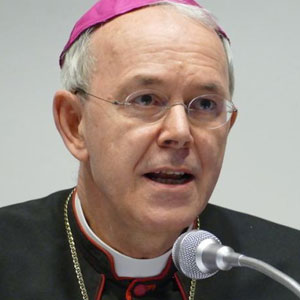
Now that you understand the language of sacred tradition, explore clear and faithful answers to deeper questions in our Q&A with Bishop Athanasius Schneider: https://www.gloriadei.io/q-and-a/
Footnotes
- Council of Trent, Session IV, Decree Concerning the Canonical Scriptures (1546).
https://www.newadvent.org/cathen/15030c.htm - First Vatican Council, Pastor Aeternus (1870).
https://www.newadvent.org/cathen/07790a.htm - Saint Vincent of Lérins, Commonitorium.
https://www.newadvent.org/fathers/3506.htm - Council of Trent, Session XIII, Decree on the Most Holy Eucharist (1551), on Transubstantiation.
https://www.newadvent.org/cathen/14774a.htm - Council of Trent, Session XXII, Doctrine on the Sacrifice of the Mass (1562).
https://www.newadvent.org/cathen/09789c.htm - Council of Trent, Session XIII, Decree on the Most Holy Eucharist, Chapter I (Real Presence).
https://www.newadvent.org/cathen/05573a.htm - Holy Bible, Douay-Rheims Version. 2 Thessalonians 2:14.
https://www.drbo.org/chapter/60002.htm - Holy Bible, Douay-Rheims Version. Jude 1:3.
https://www.drbo.org/chapter/72001.htm - Holy Bible, Douay-Rheims Version. John 6:56.
https://www.drbo.org/chapter/50006.htm - Holy Bible, Douay-Rheims Version. Matthew 26:26–28.
https://www.drbo.org/chapter/47026.htm - Holy Bible, Douay-Rheims Version. 1 Timothy 3:15.
https://www.drbo.org/chapter/62003.htm - Holy Bible, Douay-Rheims Version. Luke 1:38.
https://www.drbo.org/chapter/49001.htm - Holy Bible, Douay-Rheims Version. Hebrews 4:14.
https://www.drbo.org/chapter/65004.htm - Holy Bible, Douay-Rheims Version. 2 Timothy 1:13.
https://www.drbo.org/chapter/62001.htm
Bibliography
Sacred Scripture
Holy Bible. Douay-Rheims Version.
https://www.drbo.org
Ecumenical Councils
Council of Trent. Session IV, Decree Concerning the Canonical Scriptures (1546).
https://www.newadvent.org/cathen/15030c.htm
Council of Trent. Session XIII, Decree on the Most Holy Eucharist (1551).
https://www.newadvent.org/cathen/14774a.htm
Council of Trent. Session XXII, Doctrine on the Sacrifice of the Mass (1562).
https://www.newadvent.org/cathen/09789c.htm
First Vatican Council. Pastor Aeternus (1870).
https://www.newadvent.org/cathen/07790a.htm
Catechisms
Roman Catechism of the Council of Trent.
https://www.newadvent.org/cathen/13164a.htm
Fathers of the Church
Saint Vincent of Lérins. Commonitorium.
https://www.newadvent.org/fathers/3506.htm