Introduction
In recent decades, Catholics who adhere closely to the Church’s liturgical, doctrinal, and devotional traditions have often faced criticism. They are sometimes described as rigid, nostalgic, divisive, or resistant to legitimate authority. Such accusations can cause confusion among the faithful and discourage those who seek clarity in times of doctrinal uncertainty.
Yet the desire to preserve what the Church has always taught is not new. Saint Paul exhorted the faithful to remain steadfast:
“Therefore, brethren, stand fast; and hold the traditions which you have learned, whether by word, or by our epistle” (2 Thessalonians 2:14).
https://www.drbo.org/chapter/60002.htm
The defense of Tradition is not a personal preference but a biblical mandate. The purpose of this article is not to provoke controversy, but to examine common objections carefully and respond with theological clarity, charity, and fidelity to the perennial teaching of the Church.
What Is Meant by “Traditional Catholic”?
Before addressing objections, it is necessary to clarify terminology. A Traditional Catholic is not a member of a separate church nor the follower of a novel ideology. Rather, the term generally refers to a Catholic who:
- Holds firmly to the doctrines consistently taught prior to the modern theological crises
- Prefers the Traditional Latin Mass, also known as the Mass of the Ages
- Emphasizes Marian devotion and Eucharistic reverence
- Seeks continuity with the Church’s historical liturgy and moral teaching
The Church teaches that divine revelation is transmitted through Sacred Scripture and Sacred Tradition together, forming one deposit of faith. This truth was solemnly affirmed by the Council of Trent in its decree on Scripture and Tradition:
https://www.newadvent.org/cathen/15030c.htm
To identify as traditional, therefore, is not to invent something new. It is to desire continuity with what has already been received.
Objection 1: “Traditional Catholics Reject the Second Vatican Council”
One frequent accusation is that Traditional Catholics reject the Second Vatican Council and therefore reject the authority of the Church.
This claim requires careful distinction.
The Catholic Church teaches that ecumenical councils must be interpreted in harmony with prior dogmatic teaching. The Magisterium does not contradict itself, for divine truth cannot change.
The Roman Catechism of the Council of Trent explains that the Church is the guardian, not the author, of revelation:
https://www.newadvent.org/cathen/13164a.htm
Many Traditional Catholics do not reject the Council as an event of the Church. Rather, they express concern regarding ambiguous interpretations, pastoral applications, or theological novelties that appear inconsistent with prior magisterial clarity.
Such concern, when expressed respectfully and without denying legitimate authority, does not constitute rebellion. Throughout history, theologians and saints have sought clarification when doctrinal formulations appeared unclear.
Authentic obedience requires fidelity to the entirety of the Church’s teaching, not selective adherence to one historical moment detached from the whole tradition.
Objection 2: “Traditional Catholics Are Divisive”
Another common criticism is that Traditional Catholics create division within parishes and dioceses by insisting on older liturgical forms or stricter doctrinal clarity.
Unity, however, is not achieved through uniformity of style but through unity in truth. The Church’s unity is rooted in one faith, one baptism, and one Lord.
The Traditional Latin Mass was the normative liturgical expression of the Roman Rite for centuries. Its theological structure reflects the sacrificial nature of the Eucharist, which is firmly grounded in Scripture:
“This is my body, which shall be delivered for you” (Luke 22:19).
https://www.drbo.org/chapter/49022.htm
A desire to preserve the sacred character of worship is not inherently divisive. On the contrary, reverence for the Eucharistic sacrifice has historically strengthened ecclesial unity.
Division arises not from fidelity to tradition, but from confusion regarding doctrine and worship. When liturgical forms obscure theological truths, unity suffers. When worship clearly expresses the Church’s perennial faith, unity is strengthened.
Objection 3: “Traditional Catholics Are Rigid and Legalistic”
Some critics claim that attachment to established liturgical and moral norms reflects rigidity rather than living faith.
Yet Scripture repeatedly associates fidelity with stability and perseverance. Christ Himself teaches:
“He that shall persevere unto the end, he shall be saved” (Matthew 24:13).
https://www.drbo.org/chapter/48024.htm
Faithfulness to established doctrine is not legalism. It is trust that divine revelation is objective and unchanging. Moral teachings concerning marriage, the sanctity of life, and sexual morality are not temporary cultural positions but expressions of natural and divine law.
Saint Thomas Aquinas explains that obedience and fidelity are virtues because they subject the human will to divine wisdom.
https://www.newadvent.org/summa/3104.htm
What some call rigidity may in fact be consistency. Fidelity to what the Church has always taught protects souls from moral relativism and doctrinal instability.
Objection 4: “Traditional Catholics Reject the Pope”
Perhaps the most serious accusation is that Traditional Catholics oppose the Holy Father or undermine papal authority.
The Catholic doctrine of the papacy is clear. Christ entrusted Peter with the keys of the kingdom:
“Thou art Peter; and upon this rock I will build my church” (Matthew 16:18).
https://www.drbo.org/chapter/48016.htm
Traditional Catholics affirm this teaching. They pray for the Pope, recognize his office, and acknowledge his role as visible head of the Church.
Respectful concern regarding prudential decisions, pastoral statements, or disciplinary measures does not automatically constitute rejection of papal authority. Throughout Church history, saints have respectfully appealed for clarification when confusion arose, always maintaining reverence for the office itself.
Authentic Catholic obedience requires loyalty to the Pope as successor of Peter, while also adhering to the perennial teachings of the Church that no Pope may overturn.
Transition to Further Clarifications
The criticisms addressed thus far reveal that many objections arise from misunderstanding. The attachment to Tradition is not rebellion, division, rigidity, or rejection of authority. It is, rather, a desire for continuity, clarity, and reverence.
In the next section, we will examine further concerns, including accusations of nostalgia, elitism, and resistance to pastoral outreach, and respond with theological precision and charity.
Objection 5: “Traditional Catholics Live in the Past”
A frequent criticism suggests that Traditional Catholics are overly attached to former liturgical forms and devotional practices because of nostalgia. According to this view, fidelity to older expressions of the faith represents an inability to engage the present age.
This objection misunderstands the nature of Catholic Tradition.
The Church does not exist within the confines of a single generation. She is the Mystical Body of Christ extending across centuries. What has nourished saints for generations cannot be dismissed as irrelevant simply because it is ancient.
Sacred Scripture affirms continuity as a mark of wisdom:
“Ask thy father, and he will declare to thee: thy elders, and they will tell thee” (Deuteronomy 32:7).
https://www.drbo.org/chapter/05032.htm
To receive from the past is not regression. It is participation in the communion of saints.
The liturgical rites, theological expressions, and devotional practices preserved across centuries represent organic growth rooted in apostolic faith. Authentic development builds upon foundations already laid. It does not discard them.
Attachment to what the Church has long held sacred is not living in the past. It is remaining anchored in what transcends time.
Objection 6: “Traditional Catholics Are Elitist or Exclusionary”
Some argue that traditional communities foster exclusivity, creating enclaves detached from ordinary parish life.
True Catholic Tradition, however, is universal by nature. The very word “Catholic” means universal. The Traditional Latin Mass, far from being elitist, historically united diverse peoples through a common sacred language and rite.
Saint Paul teaches:
“There is neither Jew nor Greek… for you are all one in Christ Jesus” (Galatians 3:28).
https://www.drbo.org/chapter/55003.htm
The sacred liturgy, offered in continuity with centuries of worship, transcends culture and nationality. Its reverence and solemnity do not exclude but invite.
Elitism arises when individuals cultivate pride. Authentic traditional spirituality emphasizes humility, penance, and submission to divine order. Where pride appears, it contradicts the very Tradition it claims to defend.
Objection 7: “Traditional Catholics Resist Evangelization”
Another criticism holds that emphasis on liturgical solemnity and doctrinal precision discourages evangelization and pastoral outreach.
Yet history demonstrates the opposite. The great missionary movements of the Church flourished when doctrinal clarity and liturgical reverence were strongest.
Christ’s final command was clear:
“Going therefore, teach ye all nations… teaching them to observe all things whatsoever I have commanded you” (Matthew 28:19–20).
https://www.drbo.org/chapter/48028.htm
Evangelization is not the dilution of doctrine to make it palatable. It is the proclamation of truth in charity.
When doctrine is softened to accommodate cultural expectations, the Gospel loses its transformative power. When the fullness of Catholic teaching is proclaimed with reverence and conviction, souls are drawn not to novelty, but to truth.
Traditional Catholics who emphasize catechesis, sacramental reverence, and moral clarity seek not to withdraw from evangelization, but to ground it firmly in orthodoxy.
Objection 8: “Traditional Catholics Exaggerate Crisis in the Church”
Some maintain that references to doctrinal confusion or liturgical decline are exaggerated or pessimistic.
It is essential to approach this concern with balance and reverence. The Church, as the Bride of Christ, remains indefectible. She cannot fail in her essential mission.
At the same time, Sacred Scripture does not deny that periods of trial occur within the life of the Church. Saint Paul warns of times when sound doctrine will not be endured:
“For there shall be a time, when they will not endure sound doctrine” (2 Timothy 4:3).
https://www.drbo.org/chapter/62004.htm
To recognize historical difficulties is not to deny the Church’s divine foundation. It is to acknowledge that human weakness can obscure clarity and discipline.
Throughout history, reform has arisen not through denial of problems, but through return to foundational truths. The Council of Trent itself emerged during profound ecclesial turmoil, yet responded with doctrinal precision and liturgical reform grounded in continuity.
Concern for doctrinal clarity, when expressed with humility and fidelity, reflects love for the Church, not hostility toward her.
Objection 9: “Traditional Catholics Reject Legitimate Development”
It is sometimes claimed that Traditional Catholics oppose all development in theology or liturgy.
This accusation rests upon a misunderstanding of development itself.
Authentic doctrinal development deepens understanding while preserving meaning. It unfolds organically, like the growth of a living organism, without altering its essential nature.
Saint Vincent of Lérins articulated this principle centuries ago, explaining that development must occur in eodem sensu eademque sententia, in the same sense and the same meaning.
https://www.newadvent.org/fathers/3506.htm
Development that contradicts prior teaching is not growth but rupture. To safeguard continuity is not resistance to growth. It is fidelity to identity.
The Principle of Continuity
The Church’s teaching authority operates within a principle of continuity. Revelation is complete in Christ. The Church’s role is to guard and expound that revelation faithfully.
The Council of Trent affirmed that saving truth and moral discipline are contained in written books and unwritten traditions received from the Apostles.
https://www.newadvent.org/cathen/15030c.htm
Traditional Catholics who emphasize continuity seek not to freeze history, but to preserve coherence. When continuity is maintained, development enriches the Church. When continuity is broken, confusion results.
Fidelity to Tradition is therefore an act of ecclesial love. It expresses confidence that what the Church has long held as sacred remains a reliable guide in the present age.
The Duty to Defend Tradition with Charity
In defending Tradition, Catholics must guard against a spirit of bitterness or pride. Fidelity to the faith does not excuse harshness of speech or contempt for others.
Sacred Scripture commands:
“But doing the truth in charity, we may in all things grow up in him who is the head, even Christ” (Ephesians 4:15).
https://www.drbo.org/chapter/56004.htm
Defense of Tradition must therefore be joined to humility. Truth without charity wounds. Charity without truth deceives. The Catholic must hold both together.
Saint Augustine warns that even correct doctrine, if defended without love, fails to reflect the spirit of Christ.
https://www.newadvent.org/fathers/1603.htm
For this reason, Traditional Catholics must examine their own hearts. The purpose of apologetics is not to win arguments, but to preserve souls.
Avoiding the Sin of Pride
One legitimate concern raised about traditional communities is the temptation toward spiritual pride. When attachment to Tradition becomes a badge of superiority rather than a means of sanctification, it betrays its purpose.
Christ warns:
“Every one that exalteth himself shall be humbled” (Luke 14:11).
https://www.drbo.org/chapter/49014.htm
The saints who most loved Tradition were also the most humble. They regarded themselves as servants, not guardians of personal correctness.
Saint Thomas Aquinas teaches that obedience and humility are inseparable virtues.
https://www.newadvent.org/summa/3102.htm
Fidelity to Tradition must always be accompanied by awareness of one’s own need for conversion.
The Proper Attitude Toward the Pope and Bishops
Traditional Catholics must maintain reverence toward the Holy Father and the bishops in communion with him. The office of Peter remains divinely instituted, even when individual leaders face difficulty or controversy.
Our Lord prayed for Peter:
“I have prayed for thee, that thy faith fail not” (Luke 22:32).
https://www.drbo.org/chapter/49022.htm
Respect for the papal office is not optional. It belongs to Catholic faith itself.
At the same time, reverent concern expressed with theological precision has historical precedent. Saints such as Catherine of Siena respectfully exhorted popes while maintaining obedience and filial devotion.
To defend Tradition while preserving ecclesial communion requires prudence, patience, and prayer.
Practical Guidance for Traditional Catholics
Those who identify strongly with traditional expressions of Catholicism should cultivate certain virtues in order to avoid misunderstanding and unnecessary conflict.
- Deepen personal holiness before engaging in public debate.
- Study Sacred Scripture and magisterial documents carefully.
- Speak with measured language rather than emotional reaction.
- Avoid judging the interior dispositions of others.
- Pray regularly for unity within the Church.
The goal of apologetics is not self-justification, but fidelity to Christ.
Saint Peter instructs believers:
“Be ready always to satisfy every one that asketh you a reason of that hope which is in you. But with modesty and fear” (1 Peter 3:15).
https://www.drbo.org/chapter/67003.htm
This verse summarizes the Catholic approach to defending Tradition.
Frequently Asked Questions
Are Traditional Catholics disobedient?
No. Authentic Traditional Catholics affirm the authority of the Pope and the bishops while seeking fidelity to the perennial teachings of the Church. Obedience is central to traditional spirituality.
Is preference for the Traditional Latin Mass a rejection of the Church?
No. The Traditional Latin Mass was the normative Roman Rite for centuries and remains a legitimate expression of Catholic worship. Attachment to it reflects reverence for continuity, not rejection of authority.
Do Traditional Catholics believe the Church has failed?
No. The Church is indefectible. Concerns expressed by traditional Catholics usually relate to prudential decisions, pastoral clarity, or theological ambiguities, not to the divine constitution of the Church.
Is Tradition opposed to pastoral outreach?
No. True pastoral care is grounded in doctrinal clarity. Evangelization without truth cannot sanctify. Tradition safeguards the content of what is proclaimed.
Conclusion
The criticisms directed toward Traditional Catholics often arise from misunderstanding. Fidelity to Sacred Tradition is not rebellion, rigidity, or nostalgia. It is a desire to remain anchored in what the Church has always taught and held sacred.
Sacred Scripture commands the faithful to hold fast to what has been handed down. The Councils and the Fathers affirm that revelation must be preserved intact. The saints demonstrate that obedience, humility, and charity are inseparable from doctrinal fidelity.
In times of uncertainty, the safest course remains what it has always been: to remain within the perennial teaching of the Church, united to the See of Peter, and faithful to the deposit of faith entrusted to the Apostles.
Defense of Tradition, when exercised with humility and reverence, is not an act of division. It is an act of love for Christ and His Church.
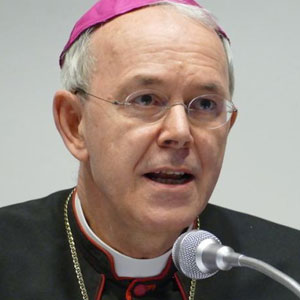
Answer objections with clarity and strengthen your defense of the faith through our Q&A with Bishop Athanasius Schneider: https://www.gloriadei.io/q-and-a/
Footnotes
- Holy Bible, Douay-Rheims Version. 2 Thessalonians 2:14.
- Council of Trent, Session IV, Decree Concerning the Canonical Scriptures.
- Roman Catechism of the Council of Trent, On the Nature of the Church and Authority.
- Holy Bible, Douay-Rheims Version. Luke 22:19.
- Holy Bible, Douay-Rheims Version. Matthew 24:13.
- Saint Thomas Aquinas, Summa Theologiae, II–II, Question 104 (On Obedience).
- Holy Bible, Douay-Rheims Version. Matthew 16:18.
- Holy Bible, Douay-Rheims Version. Deuteronomy 32:7.
- Holy Bible, Douay-Rheims Version. Galatians 3:28.
- Holy Bible, Douay-Rheims Version. Matthew 28:19–20.
- Holy Bible, Douay-Rheims Version. 2 Timothy 4:3.
- Saint Vincent of Lérins, Commonitorium.
- Holy Bible, Douay-Rheims Version. Ephesians 4:15.
- Saint Augustine, On Christian Doctrine.
- Holy Bible, Douay-Rheims Version. Luke 14:11.
- Saint Thomas Aquinas, Summa Theologiae, II–II, Question 161 (On Humility).
- Holy Bible, Douay-Rheims Version. Luke 22:32.
- Holy Bible, Douay-Rheims Version. 1 Peter 3:15.
Bibliography
Sacred Scripture
- Holy Bible. Douay-Rheims Version.
https://www.drbo.org
Councils and Catechisms
- Council of Trent. Decree Concerning the Canonical Scriptures. Session IV (1546).
https://www.newadvent.org/cathen/15030c.htm - Roman Catechism of the Council of Trent.
https://www.newadvent.org/cathen/13164a.htm
Fathers and Doctors of the Church
- Saint Augustine. On Christian Doctrine.
https://www.newadvent.org/fathers/1603.htm - Saint Thomas Aquinas. Summa Theologiae, II–II, Question 104 (On Obedience).
https://www.newadvent.org/summa/3104.htm - Saint Thomas Aquinas. Summa Theologiae, II–II, Question 161 (On Humility).
https://www.newadvent.org/summa/3161.htm - Saint Vincent of Lérins. Commonitorium.
https://www.newadvent.org/fathers/3506.htm