Introduction
The Traditional Latin Mass is not the product of medieval creativity nor the result of cultural development detached from revelation. Its structure, language, and theology are deeply rooted in Sacred Scripture.
To understand the Biblical foundations of the Traditional Latin Mass is to recognize that Catholic liturgy flows from divine revelation itself. The Holy Sacrifice of the Mass is the fulfillment of Old Testament sacrifice and the sacramental re-presentation of Christ’s redeeming oblation.
Sacred Scripture declares:
“For from the rising of the sun even to the going down, my name is great among the Gentiles: and in every place there is sacrifice, and there is offered to my name a clean oblation” (Malachi 1:11).
https://www.drbo.org/chapter/43001.htm
The Church has always understood this prophecy as prefiguring the Eucharistic sacrifice celebrated throughout the world.
What This Teaching Explains
This Scripture-based teaching examines:
- The sacrificial foundations of the Mass
- The priesthood of Christ
- The Eucharistic institution narratives
- Apostolic transmission of liturgical worship
- The continuity between Old and New Covenant worship
The Traditional Latin Mass preserves these Biblical realities with theological clarity and reverence.
Why It Matters
If the Mass is rooted in Scripture, then its sacrificial and priestly character cannot be reduced to symbolism.
The Council of Trent solemnly defined that the Mass is truly and properly a sacrifice, not merely a commemoration.¹
https://www.newadvent.org/cathen/09789c.htm
The Traditional Latin Mass visibly expresses this Biblical truth through its prayers, orientation, silence, and ceremonial structure.
To separate the Mass from its Scriptural foundation risks weakening faith in the Real Presence and the sacrificial nature of redemption.
Who This Serves
This teaching serves:
- Clergy and seminarians seeking Scriptural depth
- Traditional Catholics desiring Biblical confirmation
- Converts exploring Catholic liturgy
- Faithful seeking greater reverence and understanding
To see the Mass through the lens of Scripture deepens Eucharistic faith.
Old Testament Foundations of Sacrifice
The Sacrifice of Abel, Abraham, and Moses
From the earliest pages of Scripture, sacrifice stands at the heart of worship.
Abel offered a sacrifice pleasing to God (Genesis 4:4).
Abraham prepared to offer Isaac in obedience (Genesis 22).
Moses established sacrificial worship within the covenant.
These sacrifices prefigure the perfect offering of Christ.
When Abraham obeyed, God declared:
“Because thou hast obeyed my voice, I will bless thee” (Genesis 22:18).
https://www.drbo.org/chapter/01022.htm
The obedience of Abraham anticipates the obedience of Christ.
The Passover as Prefiguration
The Passover lamb, whose blood saved Israel from death, prefigures Christ, the true Lamb of God.
Saint Paul teaches:
“For Christ our pasch is sacrificed” (1 Corinthians 5:7).
https://www.drbo.org/chapter/53005.htm
The Traditional Latin Mass retains this sacrificial consciousness in its prayers and gestures.
The Institution of the Eucharist
At the Last Supper, Christ instituted the Eucharist in sacrificial language.
“This is my body… this is my blood… which shall be shed for many” (Matthew 26:26–28).
https://www.drbo.org/chapter/47026.htm
These words are not symbolic. They establish the sacrament that perpetuates His sacrifice.
Saint Paul confirms the apostolic transmission of this institution:
“For I have received of the Lord that which also I delivered unto you” (1 Corinthians 11:23).
https://www.drbo.org/chapter/53011.htm
This language of receiving and handing on reflects Sacred Tradition.
The Priesthood of Christ
The Letter to the Hebrews reveals Christ as the eternal High Priest:
“Thou art a priest for ever according to the order of Melchisedech” (Hebrews 7:17).
https://www.drbo.org/chapter/65007.htm
The priesthood exercised at the altar participates in this one priesthood.
The Traditional Latin Mass expresses this priestly mediation clearly through:
- The separation of the sanctuary and the nave
- The orientation toward the altar
- The sacrificial prayers of the Canon
The priest acts in persona Christi, offering the Holy Victim to the Father.
The Heavenly Liturgy in the Apocalypse
The Book of Revelation presents a vision of heavenly worship filled with:
- Altars
- Incense
- Vestments
- Prostration
“And another angel came, and stood before the altar, having a golden censer” (Apocalypse 8:3).
https://www.drbo.org/chapter/73008.htm
The Traditional Latin Mass mirrors this Biblical vision. Its ceremonial solemnity reflects heavenly worship.
Apostolic Worship and Liturgical Continuity
The Early Church and the “Breaking of Bread”
After the Ascension, the Apostles continued sacrificial worship.
“And they were persevering in the doctrine of the apostles, and in the communication of the breaking of bread, and in prayers” (Acts 2:42).
https://www.drbo.org/chapter/51002.htm
The phrase “breaking of bread” does not refer to an ordinary meal. It refers to Eucharistic worship within the apostolic community.
This perseverance included:
- Fixed prayers
- Apostolic teaching
- Liturgical continuity
The Traditional Latin Mass preserves this apostolic structure: Word, Offertory, Canon, Communion.
Tradition as Transmission of Worship
Saint Paul speaks clearly of liturgical transmission:
“For I have received of the Lord that which also I delivered unto you” (1 Corinthians 11:23).
https://www.drbo.org/chapter/53011.htm
The language of “received” and “delivered” expresses Sacred Tradition.
The Church did not invent her worship. She received it.
The Council of Trent affirms that saving truth and discipline are preserved in written books and unwritten traditions handed down from the Apostles.¹
https://www.newadvent.org/cathen/15030c.htm
The Traditional Latin Mass stands within this uninterrupted transmission.
Silence, Reverence, and Sacred Mystery in Scripture
Silence is not foreign to Biblical worship.
When the prophet Elias encountered the Lord, it was not in the earthquake or fire, but in a “whistling of a gentle air” (3 Kings 19:12).
https://www.drbo.org/chapter/11019.htm
Sacred silence prepares the soul to encounter divine mystery.
The Canon of the Traditional Latin Mass is prayed quietly to reflect this sacred awe. The silence is theological. It teaches that the mystery exceeds human speech.
The Sacrificial Language of the Canon
The Roman Canon repeatedly speaks of offering:
- A pure victim
- A holy victim
- An unspotted victim
This sacrificial vocabulary reflects Scriptural language.
Malachi prophesied a “clean oblation” offered in every place (Malachi 1:11).
https://www.drbo.org/chapter/43001.htm
The Church has consistently interpreted this prophecy as referring to the Eucharistic sacrifice.
The Council of Trent definitively teaches that this sacrifice is the same sacrifice as Calvary, made present sacramentally.²
https://www.newadvent.org/cathen/09789c.htm
The Traditional Latin Mass preserves this sacrificial clarity without ambiguity.
The Orientation Toward God
Throughout Scripture, worship is directed toward God, not toward the assembly.
The Psalmist proclaims:
“I will go into the altar of God” (Psalm 42:4).
https://www.drbo.org/chapter/21042.htm
In the Traditional Latin Mass, priest and faithful face the same direction — symbolically toward the Lord.
This posture expresses a shared movement toward divine transcendence.
It is not separation from the people, but unity before God.
The Real Presence in Scripture
Christ’s words in the Bread of Life discourse leave no room for metaphor:
“My flesh is meat indeed: and my blood is drink indeed” (John 6:56).
https://www.drbo.org/chapter/50006.htm
Many disciples departed because the teaching was difficult (John 6:67). Yet Christ did not soften His words.
The Council of Trent defined the doctrine of transubstantiation to safeguard this Scriptural truth.³
https://www.newadvent.org/cathen/14774a.htm
The Traditional Latin Mass expresses this belief through:
- Kneeling for Communion
- Sacred silence
- Genuflections
- Adoration
Belief shapes posture. Posture reflects belief.
Why This Matters for the Faithful Today
Modern discourse often reduces the Mass to fellowship or remembrance. Scripture presents it as a sacrifice and a covenant.
If the Biblical foundation of the Mass is forgotten, Eucharistic faith weakens.
Saint Paul warns:
“Whosoever shall eat this bread, or drink the chalice of the Lord unworthily, shall be guilty of the body and of the blood of the Lord” (1 Corinthians 11:27).
https://www.drbo.org/chapter/53011.htm
Such language presupposes a real and sacred presence.
The Traditional Latin Mass safeguards this Scriptural realism.
Frequently Asked Questions
Is the Traditional Latin Mass truly rooted in Scripture?
Yes. Its structure reflects Old Testament sacrifice, Christ’s institution at the Last Supper, apostolic transmission, and heavenly worship described in the Apocalypse.
Why emphasize sacrificial language so strongly?
Because Scripture and the Council of Trent affirm that the Mass is a true sacrifice, not merely a symbolic remembrance.²
Is liturgical silence Biblical?
Yes. Sacred silence appears repeatedly in Scriptural encounters with divine mystery and fosters reverence.
Why does the priest face the altar?
Because worship is directed to God. This posture reflects Scriptural orientation toward divine transcendence.
Does Scripture support belief in the Real Presence?
Yes. Christ’s words in John 6 and the institution narratives affirm a true, substantial presence. The Church defined this truth using the term transubstantiation.³
Final Exhortation
The Traditional Latin Mass does not stand apart from Scripture. It rises from it.
From Abel’s sacrifice to Abraham’s obedience, from the Passover lamb to the Cross of Christ, from the Upper Room to the heavenly altar of the Apocalypse, Scripture unfolds toward the Holy Sacrifice of the Mass.
To assist at the Traditional Latin Mass is to enter into the fulfillment of Biblical worship.
May the faithful rediscover the Scriptural depth of the Mass of the Ages, grow in Eucharistic reverence, and remain steadfast in the Sacred Tradition handed down from the Apostles.
May the Reign of Mary come.
Adveniat Regnum Mariae!
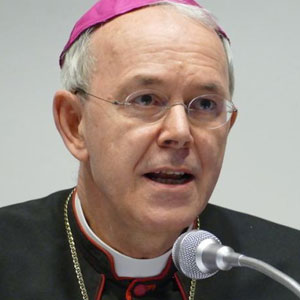
Deepen your understanding of the biblical roots of the Mass with clear and faithful answers in our Q&A with Bishop Athanasius Schneider: https://www.gloriadei.io/q-and-a/
Footnotes
- Council of Trent, Session IV, Decree Concerning the Canonical Scriptures (1546).
https://www.newadvent.org/cathen/15030c.htm - Council of Trent, Session XXII, Doctrine on the Sacrifice of the Mass (1562).
https://www.newadvent.org/cathen/09789c.htm - Council of Trent, Session XIII, Decree on the Most Holy Eucharist (1551), on Transubstantiation.
https://www.newadvent.org/cathen/14774a.htm - Holy Bible, Douay-Rheims Version. Malachi 1:11.
https://www.drbo.org/chapter/43001.htm - Holy Bible, Douay-Rheims Version. Matthew 26:26–28.
https://www.drbo.org/chapter/47026.htm - Holy Bible, Douay-Rheims Version. 1 Corinthians 11:23.
https://www.drbo.org/chapter/53011.htm - Holy Bible, Douay-Rheims Version. 1 Corinthians 5:7.
https://www.drbo.org/chapter/53005.htm - Holy Bible, Douay-Rheims Version. Hebrews 7:17.
https://www.drbo.org/chapter/65007.htm - Holy Bible, Douay-Rheims Version. Apocalypse 8:3.
https://www.drbo.org/chapter/73008.htm - Holy Bible, Douay-Rheims Version. Acts 2:42.
https://www.drbo.org/chapter/51002.htm - Holy Bible, Douay-Rheims Version. 3 Kings 19:12.
https://www.drbo.org/chapter/11019.htm - Holy Bible, Douay-Rheims Version. Psalm 42:4.
https://www.drbo.org/chapter/21042.htm - Holy Bible, Douay-Rheims Version. John 6:56.
https://www.drbo.org/chapter/50006.htm - Holy Bible, Douay-Rheims Version. 1 Corinthians 11:27.
https://www.drbo.org/chapter/53011.htm - Holy Bible, Douay-Rheims Version. Genesis 22:18.
https://www.drbo.org/chapter/01022.htm
Bibliography
Sacred Scripture
Holy Bible. Douay-Rheims Version.
https://www.drbo.org
Ecumenical Councils
Council of Trent. Session IV, Decree Concerning the Canonical Scriptures (1546).
https://www.newadvent.org/cathen/15030c.htm
Council of Trent. Session XIII, Decree on the Most Holy Eucharist (1551).
https://www.newadvent.org/cathen/14774a.htm
Council of Trent. Session XXII, Doctrine on the Sacrifice of the Mass (1562).
https://www.newadvent.org/cathen/09789c.htm