
Introduction
In an age marked by resistance to authority and confusion concerning moral truth, the virtue of obedience is often misunderstood or dismissed. Yet from the beginning of divine revelation, obedience has stood at the heart of humanity’s relationship with God.
Our Lord speaks with divine clarity:
“If you love me, keep my commandments” (John 14:15).
Source: Douay-Rheims Bible
https://www.drbo.org/chapter/50014.htm
Sacred Scripture reveals that communion with the Creator is restored not through self-assertion but through humble submission to the divine will. From the fall of man to the fulfillment of redemption, the history of salvation unfolds as a drama of obedience and disobedience.
Within the Catholic Church, obedience is neither blind submission nor passive conformity. It is a deliberate act of faith by which the believer unites his will to God’s will, trusting that divine truth is preserved through Sacred Scripture and Apostolic Tradition entrusted to the Church.
This reflection considers the beauty of obedience as taught in Scripture and upheld by the perennial Magisterium. By contemplating its doctrinal foundations and spiritual fruits, the faithful may rediscover obedience as a source of interior peace, doctrinal stability, and authentic freedom in Christ.
Understanding Obedience in Catholic Teaching
Obedience within Catholic doctrine extends far beyond the observance of external regulations. It is a moral virtue by which the intellect recognizes lawful authority, and the will freely submits to it for the sake of God. All legitimate authority ultimately proceeds from God, who governs creation with wisdom and justice.
The Roman Catechism of the Council of Trent teaches that obedience belongs to the order of justice and requires honor toward those entrusted with authority:
https://www.newadvent.org/cathen/13164a.htm
This obedience is not servile. It is rational, voluntary, and rooted in reverence for divine order rather than fear of punishment.
The Church further teaches that obedience is owed only insofar as authority remains in harmony with God’s law. No command may bind the conscience if it contradicts divine revelation. This principle safeguards both truth and conscience while preserving the hierarchical structure established by Christ.
When practiced rightly, obedience forms the soul in humility and protects it from the disorder that arises when private judgment replaces objective truth. Through this virtue, unity is preserved within the Church and peace is maintained amid moral and doctrinal turmoil.
Defining Obedience: A Scriptural and Doctrinal Overview
At its foundation, obedience is the human response to the word of God revealed in Sacred Scripture.
Saint James exhorts the faithful:
“Be ye doers of the word, and not hearers only” (James 1:22).
https://www.drbo.org/chapter/59001.htm
To hear divine truth without conforming one’s life to it fractures faith itself. Scripture consistently teaches that revelation demands response, not mere acknowledgment.
From the earliest pages of the Old Testament, obedience is shown to restore communion with God, while disobedience brings rupture and death. The fall of Adam originates in the refusal to obey. Salvation begins when the will submits once more to divine command.
Saint Paul reveals that redemption itself is accomplished through obedience:
“He humbled himself, becoming obedient unto death, even to the death of the cross” (Philippians 2:8).
https://www.drbo.org/chapter/57002.htm
The obedience of Christ stands at the center of the Christian mystery. Through it, the disobedience of Adam is repaired, and humanity is reconciled to the Father.
The Church has always taught that obedience can never compel sin. The Council of Trent affirms that divine revelation is transmitted through Sacred Scripture and Sacred Tradition, both of which bind the conscience of the faithful:
https://www.newadvent.org/cathen/15030c.htm
When obedience conforms to this divine order, it becomes an act of worship offered to God Himself.
The Virtue of Obedience in the Life of the Church
Obedience is numbered among the moral virtues because it disposes the soul habitually toward the good. It is not a submission born of fear, but a willing offering shaped by charity.
Contrary to modern assumptions, obedience does not diminish freedom. Authentic freedom is perfected when ordered toward truth. Freedom detached from divine law produces instability. Freedom guided by obedience brings interior peace.
Throughout history, the Church has remained faithful not through innovation, but through obedience to what has been received. Fidelity to Tradition is therefore not attachment to the past, but submission to continuity.
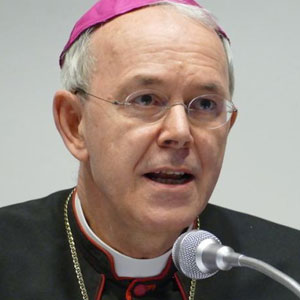
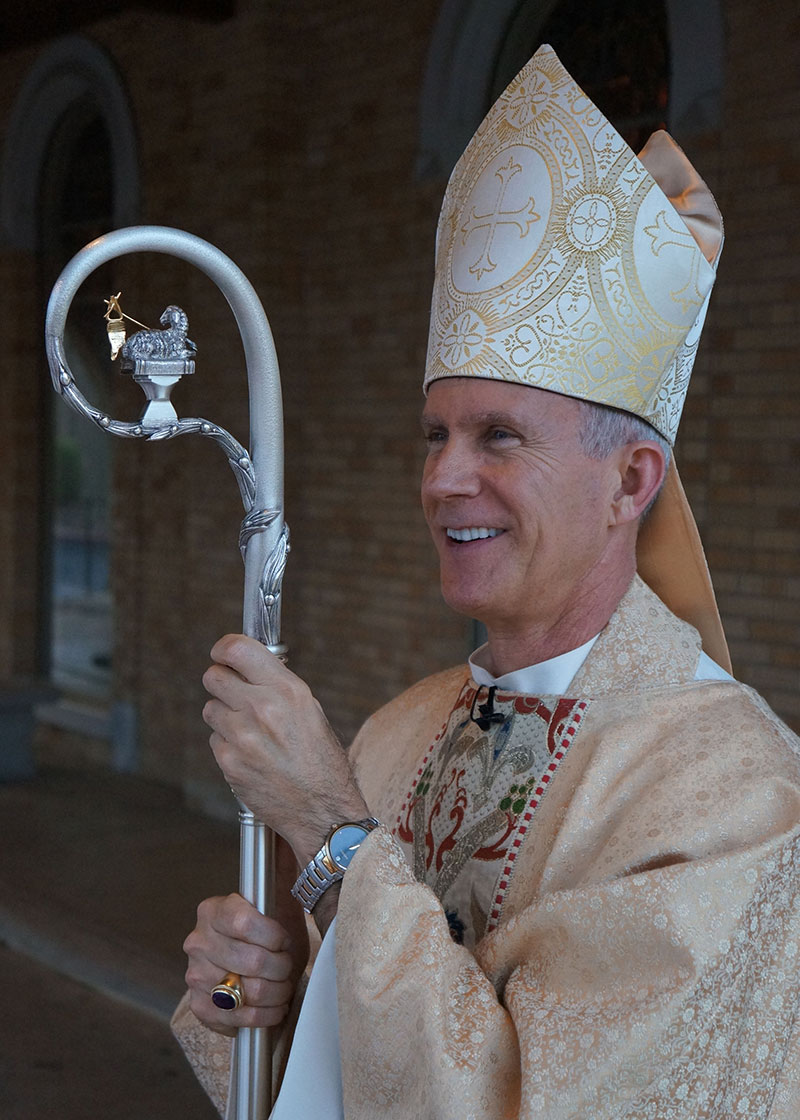
As Bishop Athanasius Schneider has consistently taught, true renewal in the Church arises only from fidelity to the deposit of faith handed down from the Apostles.
Where obedience has been honored, the Church has flourished. Where it has been neglected, confusion has followed. The restoration of this virtue remains essential for the preservation of Catholic identity and the sanctification of souls.
Obedience and Fidelity to Tradition
In Catholic theology, obedience cannot be separated from fidelity to Sacred Tradition. Tradition is not a collection of human customs nor a museum of ancient practices. It is the living transmission of divine revelation entrusted by Christ to the Apostles and faithfully handed down through the centuries under the guidance of the Holy Ghost.
Sacred Tradition preserves what the Church has received, not what she invents. To remain obedient to Tradition is therefore to remain obedient to Christ Himself, who commanded the Apostles to teach all nations everything He had delivered to them.
The Church has consistently taught that revelation is transmitted through two inseparable sources: Sacred Scripture and Sacred Tradition. This truth was solemnly affirmed by the Council of Trent in its Decree Concerning the Canonical Scriptures.
https://www.newadvent.org/cathen/15030c.htm
Fidelity to Tradition is thus not nostalgia, nor resistance to legitimate development. It is obedience to the divine order established by God, who wills that His truth be preserved intact until the end of time.
Tradition as Transmission, Not Innovation
The word tradition comes from the Latin tradere, meaning “to hand down.” What the Church hands down is not her own teaching, but the doctrine received from Christ through the Apostles.
The Roman Catechism of the Council of Trent explains that the Church is not the author of doctrine, but its guardian. Her authority exists not to alter revelation, but to protect and faithfully transmit it.
https://www.newadvent.org/cathen/13164a.htm
Throughout history, the Church has understood development as organic growth in clarity, not alteration in substance. Authentic development deepens understanding while preserving meaning. Innovation that contradicts what was previously believed cannot be considered progress.
For this reason, obedience to Tradition is inseparable from doctrinal humility. The faithful do not stand above the faith to judge it, but beneath it to receive it. This posture of receptivity safeguards unity and prevents the fragmentation that arises when individual interpretation replaces ecclesial authority.
Sacred Scripture as the Foundation of Tradition
Sacred Scripture itself bears witness to the authority of Tradition. The Apostles transmitted the faith not only through written texts, but through oral teaching and liturgical practice.
Saint Paul instructs the Thessalonians:
“Therefore, brethren, stand fast and hold the traditions which you have learned, whether by word or by our epistle” (2 Thessalonians 2:14).
https://www.drbo.org/chapter/60002.htm
This apostolic command demonstrates that divine revelation was never confined to written Scripture alone. The living teaching authority of the Church existed prior to the completion of the New Testament and remains necessary for its authentic interpretation.
Sacred Scripture does not oppose Tradition. It presupposes it. Without Tradition, the canon of Scripture itself could not be known, nor could its meaning be safeguarded from distortion.
For this reason, obedience to Scripture necessarily includes obedience to the Church that received, preserved, and interprets it.
Old Testament Foundations of Obedience to Divine Law
The Old Testament repeatedly affirms that obedience to God’s commandments is the condition for blessing, stability, and communion with Him.
When Moses delivers the Law to Israel, the covenant is explicitly tied to obedience. God declares that fidelity to His commandments brings life, while rebellion leads to disorder and exile.
The Book of Deuteronomy exhorts the people:
“Hear, O Israel, and observe to do the things which the Lord hath commanded thee” (Deuteronomy 6:3).
https://www.drbo.org/chapter/05006.htm
Joshua receives a similar command upon assuming leadership of Israel:
“Meditate on the law day and night, that thou mayest observe and do all things that are written in it” (Joshua 1:8).
https://www.drbo.org/chapter/06001.htm
These passages reveal that obedience is not incidental to covenant life. It is the very condition of fidelity to God’s promise.
Abraham as the Model of Obedient Faith
Among all Old Testament figures, Abraham stands as the supreme model of obedience. When commanded to offer his only son Isaac, he obeyed without knowing how God’s promise would be fulfilled.
Sacred Scripture records God’s response:
“Because thou hast obeyed my voice, I will bless thee” (Genesis 22:18).
https://www.drbo.org/chapter/01022.htm
Abraham’s obedience was not blind. It was rooted in trust. He believed that God could not contradict Himself, even when His command surpassed human understanding.
For this reason, the Church has always regarded Abraham as the exemplar of the obedience of faith. His submission prefigures the perfect obedience of Christ and teaches that authentic faith is proven not by words, but by surrender of the will.
Christ as the Fulfillment of All Obedience
All obedience in Scripture finds its fulfillment in Jesus Christ. Where Adam disobeyed, Christ obeyed. Where rebellion introduced death, obedience restored life.
Saint Paul proclaims:
“As by the disobedience of one man many were made sinners, so also by the obedience of one many shall be made just” (Romans 5:19).
https://www.drbo.org/chapter/52005.htm
The Incarnation itself is an act of obedience. The Passion is obedience unto suffering. The Cross is obedience unto death. Through Christ’s submission to the Father, redemption is accomplished.
Every act of Christian obedience participates in this mystery. When the faithful submit their will to God, they are united to the obedience of Christ and drawn more deeply into the life of grace.
Tradition as a Safeguard in Times of Confusion
In periods of doctrinal uncertainty, the Church has always turned not to novelty, but to Tradition. What has been believed everywhere, always, and by all remains the sure guide when confusion multiplies.
Fidelity to Tradition provides continuity amid upheaval. It anchors the faithful in objective truth when subjective opinion threatens to dominate.
As Bishop Athanasius Schneider has repeatedly emphasized, the Church does not renew herself by abandoning her inheritance, but by returning to it. Obedience to Tradition is therefore not resistance to the present age, but fidelity to Christ who remains the same yesterday, today, and forever.
Obedience Lived in the Church, the Saints, and Daily Christian Life
The Saints as Living Witnesses of Obedience
The doctrine of obedience finds its clearest expression not only in theological texts but in the lives of the saints. Throughout every age of the Church, sanctity has been marked by humble submission to the will of God.
The saints understood obedience not as loss, but as participation in divine wisdom. By renouncing their own will, they allowed God to act freely within them.
Saint Augustine teaches that obedience is the remedy for pride, the root of all sin. Through obedience, the soul returns to its proper order under God.
https://www.newadvent.org/fathers/1301.htm
Saint Thomas Aquinas likewise explains that obedience is the greatest of the moral virtues insofar as it directly subjects the human will to God.
https://www.newadvent.org/summa/3104.htm
Their teaching confirms that holiness does not arise from personal originality, but from conformity to divine truth.
The Blessed Virgin Mary as the Perfect Model of Obedience
Among all creatures, the Blessed Virgin Mary stands as the supreme example of obedience. Her entire life is marked by perfect submission to the will of God.
At the Annunciation, she responds to the angel Gabriel with words that changed the course of history:
“Behold the handmaid of the Lord. Be it done unto me according to thy word” (Luke 1:38).
https://www.drbo.org/chapter/49001.htm
This fiat was not spoken with full understanding of the suffering to come, yet it was offered with complete trust. Through her obedience, the Word was made flesh and salvation entered the world.
The Church has always venerated Mary as the New Eve. Where Eve’s disobedience brought death, Mary’s obedience opened the way to life. Her Immaculate Heart remains the refuge and model for all who seek fidelity in times of confusion.
Obedience to the Church and Her Authority
For the Church to fulfill her divine mission, she must possess structure, authority, and continuity. Christ Himself established this order when He entrusted His Church to the Apostles and appointed Saint Peter as its visible head.
Our Lord declared:
“Thou art Peter, and upon this rock I will build my church” (Matthew 16:18).
https://www.drbo.org/chapter/48016.htm
Obedience to the Church does not rest upon the personal holiness of her ministers, but upon Christ’s promise to guide her in truth. The faithful are therefore called to respect the Pope and bishops in communion with him, even amid personal difficulties or historical trials.
The Roman Catechism teaches that submission to lawful ecclesiastical authority belongs to the order established by God for the preservation of unity and faith.
https://www.newadvent.org/cathen/13164a.htm
This obedience is not unconditional submission to every opinion, but reverent adherence to the Church’s authentic teaching authority as transmitted through the perennial Magisterium.
Obedience in Marriage and Family Life
The virtue of obedience extends naturally into marriage and family life, where it fosters order, charity, and peace.
Saint Paul instructs the faithful:
“Be subject one to another, in the fear of Christ” (Ephesians 5:21).
https://www.drbo.org/chapter/56005.htm
Within marriage, obedience is not domination, but mutual self-giving. Husbands are commanded to love their wives as Christ loved the Church, while wives are called to respectful cooperation. This mutual submission reflects the sacrificial love of Christ Himself.
Children are likewise instructed to obey their parents, a command rooted in the Fourth Commandment. Even the Son of God submitted Himself to Mary and Joseph, sanctifying family obedience by His example.
In an age that often rejects authority within the home, Catholic family life remains a powerful witness to the harmony that obedience brings.
Obedience, Conscience, and Moral Responsibility
Authentic obedience does not contradict conscience. Rather, it forms and enlightens it. Catholic teaching holds that conscience must be obeyed, but it must also be properly formed.
A conscience detached from truth becomes unreliable. For this reason, the faithful are obligated to shape their conscience according to Sacred Scripture, Church teaching, and sound moral instruction.
Saint Paul reminds believers that God has written His law upon the human heart, yet this interior law must be guided by divine revelation.
https://www.drbo.org/chapter/52002.htm
Obedience to the Church assists the faithful in discerning moral truth and protects against error rooted in emotion, cultural pressure, or personal preference.
Obedience in the Workplace and Civil Society
Christian obedience extends beyond the sanctuary into daily life. The faithful are called to respect just civil authority and to contribute to the common good.
Sacred Scripture instructs:
“Let every soul be subject to higher powers” (Romans 13:1).
https://www.drbo.org/chapter/52013.htm
This obedience is not absolute. When civil authority commands what is contrary to divine law, Christians must obey God rather than men. Yet in ordinary circumstances, respect for law, order, and legitimate authority is an expression of Christian virtue.
By living obedience in society, Catholics bear witness to the peace that flows from divine order.
Modern Challenges to the Virtue of Obedience
The modern world frequently exalts autonomy and rejects submission of any kind. Digital media amplifies voices that undermine doctrine, ridicule authority, and elevate personal opinion above revealed truth.
This environment fosters instability and anxiety. When every individual becomes his own authority, unity collapses and truth fragments.
In contrast, obedience anchors the soul. By adhering to the enduring wisdom of the Church rather than passing cultural trends, the faithful find stability amid confusion.
Bishop Athanasius Schneider has repeatedly warned that fidelity to Tradition remains the surest safeguard during periods of doctrinal uncertainty.
Frequently Asked Questions
What are the spiritual fruits of obedience?
Obedience deepens humility, strengthens faith, and unites the soul more closely to Christ. It disposes the heart to receive grace and fosters interior peace.
Is obedience opposed to freedom?
No. Catholic theology teaches that freedom is perfected when ordered toward truth. Obedience directs freedom toward its proper end in God.
Does obedience require accepting error?
No. The faithful are never obliged to obey commands that contradict divine law or Catholic doctrine. True obedience always remains subject to truth.
Why is obedience important in times of confusion?
When opinions multiply, and certainty weakens, obedience to what has been handed down protects the faithful from doctrinal instability and preserves unity within the Church.
Conclusion
Obedience is not a burden imposed upon the Christian life, but a path toward holiness. Rooted in Scripture, safeguarded by Tradition, and lived by the saints, obedience forms the soul in truth and charity.
Through obedience, the faithful participate in the obedience of Christ Himself, whose submission to the Father redeemed the world. In a time marked by unrest and division, the recovery of this virtue remains essential for the renewal of faith, the preservation of doctrine, and the sanctification of souls.
Live out obedience and fidelity with greater clarity by exploring our Q&A with Bishop Athanasius Schneider: https://www.gloriadei.io/q-and-a/
Footnotes
- Holy Bible, Douay-Rheims Version. John 14:15.
- Holy Bible, Douay-Rheims Version. James 1:22.
- Roman Catechism of the Council of Trent, Part III, On the Fourth Commandment.
- Council of Trent, Fourth Session, Decree Concerning the Canonical Scriptures.
- Holy Bible, Douay-Rheims Version. Philippians 2:8.
- Holy Bible, Douay-Rheims Version. Romans 5:19.
- Holy Bible, Douay-Rheims Version. 2 Thessalonians 2:14.
- Holy Bible, Douay-Rheims Version. Deuteronomy 6:3.
- Holy Bible, Douay-Rheims Version. Joshua 1:8.
- Holy Bible, Douay-Rheims Version. Genesis 22:18.
- Saint Augustine, On the Morals of the Catholic Church.
- Saint Thomas Aquinas, Summa Theologiae, Second Part of the Second Part, Question 104 (On Obedience).
- Holy Bible, Douay-Rheims Version. Luke 1:38.
- Holy Bible, Douay-Rheims Version. Matthew 16:18.
- Holy Bible, Douay-Rheims Version. Ephesians 5:21.
- Holy Bible, Douay-Rheims Version. Romans 2:15.
- Holy Bible, Douay-Rheims Version. Romans 13:1.
Bibliography
Sacred Scripture
- Holy Bible. Douay-Rheims Version.
https://www.drbo.org
Councils and Catechisms
- Council of Trent. Decree Concerning the Canonical Scriptures. Session IV (1546).
https://www.newadvent.org/cathen/15030c.htm - Roman Catechism of the Council of Trent.
https://www.newadvent.org/cathen/13164a.htm
Fathers and Doctors of the Church
- Saint Augustine. On the Morals of the Catholic Church.
https://www.newadvent.org/fathers/1301.htm - Saint Thomas Aquinas. Summa Theologiae, II–II, Question 104: On Obedience.
https://www.newadvent.org/summa/3104.htm