Introduction
In every age of the Church, fidelity to the Catholic faith has required not only personal conviction, but communal perseverance. Spiritual fraternity is the supernatural bond that unites clergy and faithful in shared adherence to Sacred Scripture, Sacred Tradition, and the perennial Magisterium.
The faith is not a private possession. It is a treasure entrusted to the Church.
Saint Jude exhorts the faithful:
“Contend earnestly for the faith once delivered to the saints” (Jude 1:3).
https://www.drbo.org/chapter/72001.htm
This exhortation presumes vigilance. Yet vigilance is strengthened when believers stand together in truth.
Spiritual fraternity exists to preserve fidelity — not through sentiment, but through communion rooted in doctrine, worship, and charity.
What Spiritual Fraternity Is
Spiritual fraternity is a communion of souls united by:
- Fidelity to the deposit of faith
- Reverent participation in the Holy Sacrifice of the Mass
- Adherence to Sacred Tradition
- Devotion to the Blessed Virgin Mary
- Respect for the hierarchical structure established by Christ
It is not defined by cultural alignment or personal preference. It is defined by shared submission to revealed truth.
Saint Paul teaches:
“One Lord, one faith, one baptism” (Ephesians 4:5).
https://www.drbo.org/chapter/56004.htm
True fraternity arises where unity in faith precedes unity in sentiment.
Why It Matters
The Church is not sustained by enthusiasm alone. She is sustained by truth.
Saint Paul describes the Church as:
“The pillar and ground of the truth” (1 Timothy 3:15).
https://www.drbo.org/chapter/62003.htm
When doctrinal confusion spreads, isolation weakens perseverance. Fraternity strengthens it.
Throughout history, fidelity has been preserved where Catholics have encouraged one another in:
- Orthodoxy
- Reverent worship
- Moral discipline
- Obedience ordered toward truth
Spiritual fraternity becomes a safeguard against discouragement and doctrinal erosion.
Theological Foundations of Spiritual Fraternity
Unity in the Deposit of Faith
The faith entrusted to the Apostles is complete and unalterable in substance.
The Council of Trent affirmed that saving truth and moral discipline are contained in written books and unwritten traditions received from the Apostles.¹
https://www.newadvent.org/cathen/15030c.htm
Spiritual fraternity strengthens attachment to this deposit by mutual encouragement in fidelity.
When believers support one another in doctrinal clarity, unity deepens.
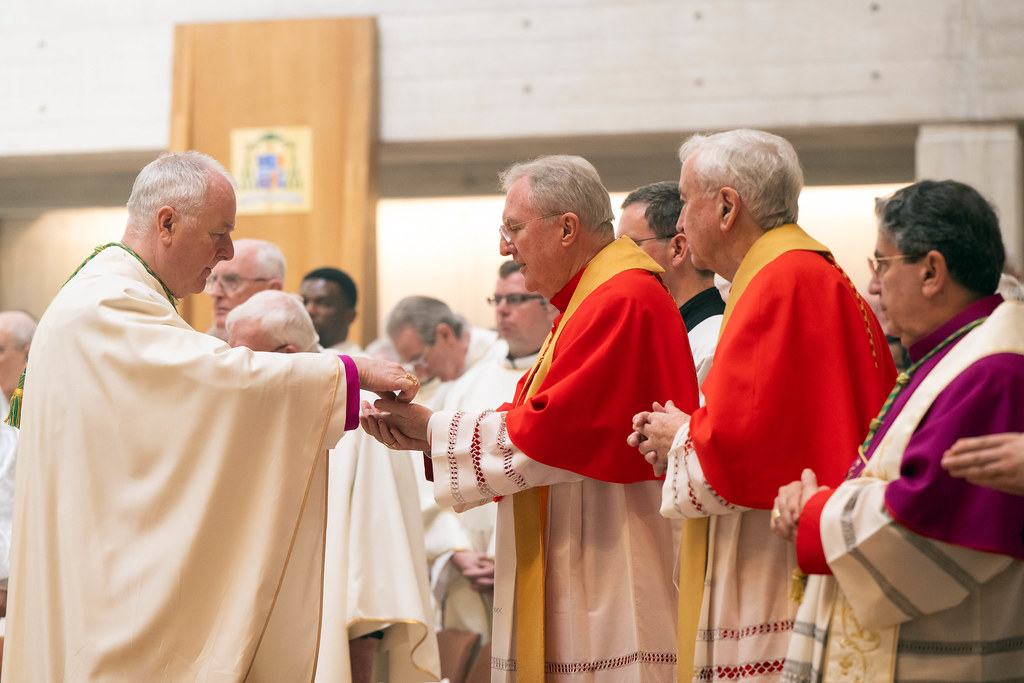
Communion in the Holy Eucharist
Fraternity finds its visible center in the Eucharistic sacrifice.
“Because there is one bread, we, though many, are one body” (1 Corinthians 10:17).
https://www.drbo.org/chapter/53010.htm
The Traditional Latin Mass visibly expresses this unity through common orientation toward God and shared adoration before the altar.
The Council of Trent teaches that the Mass is the same sacrifice as Calvary made present sacramentally.²
https://www.newadvent.org/cathen/09789c.htm
A fraternity rooted in sacrifice becomes sacrificial in spirit.
Fidelity and Ecclesial Structure
Spiritual fraternity exists within the visible Church established by Christ.
“Thou art Peter; and upon this rock I will build my church” (Matthew 16:18).
https://www.drbo.org/chapter/48016.htm
Authentic fraternity does not replace ecclesiastical authority. It strengthens fidelity to it, especially in times of difficulty.
The First Vatican Council affirmed that dogmatic teaching must always retain the meaning once declared.³
https://www.newadvent.org/cathen/07790a.htm
Shared commitment to this continuity forms the foundation of enduring unity.
Historical Witness to Spiritual Fraternity
The Apostolic Community
From the earliest days of the Church, the faithful persevered together in doctrine and worship.
“And they were persevering in the doctrine of the apostles, and in the communication of the breaking of bread, and in prayers” (Acts 2:42).
https://www.drbo.org/chapter/51002.htm
This passage reveals three pillars of spiritual fraternity:
- Fidelity to apostolic teaching
- Eucharistic communion
- Perseverance in prayer
Fraternity was not optional. It was constitutive of Christian life.
Fraternity in Times of Trial
Throughout history, doctrinal crises have tested the Church. In such times, unity among the faithful proved essential.
Saint Paul exhorts:
“Watch ye, stand fast in the faith, do manfully, and be strengthened” (1 Corinthians 16:13).
https://www.drbo.org/chapter/53016.htm
Standing fast is strengthened when believers support one another in truth.
The saints endured persecution, exile, and doctrinal confusion not as isolated individuals, but as members of a visible communion sustained by shared worship and shared fidelity.
Spiritual Fraternity and the Mass of the Ages
The Traditional Latin Mass forms fraternity through common adoration of the Eucharistic Lord.
When priest and faithful kneel together before the altar, unity deepens in humility.
The Council of Trent affirms that in the Mass, the same Christ who offered Himself on the Cross is offered in an unbloody manner.²
https://www.newadvent.org/cathen/09789c.htm
Fraternity centered on sacrifice calls each member to:
- Patience in trial
- Charity toward one another
- Perseverance in fidelity
- Reparation for sin
Sacrificial worship forms sacrificial souls.
Marian Devotion as the Heart of Unity
At the foot of the Cross, the Blessed Virgin Mary stood in unwavering fidelity.
“Behold thy mother” (John 19:27).
https://www.drbo.org/chapter/50019.htm
Mary’s maternal presence reveals the spiritual dimension of fraternity. She unites believers not through coercion, but through charity.
Devotion to the Immaculate Heart fosters:
- Humility in disagreement
- Strength in suffering
- Fidelity amid confusion
Where Marian devotion flourishes, unity is safeguarded.
Practical Expressions of Spiritual Fraternity
Spiritual fraternity preserves the faith through concrete practices:
- Regular participation in the Holy Sacrifice of the Mass
- Study of Sacred Scripture and the Roman Catechism
- Shared prayer of the Rosary
- Mutual encouragement in virtue
- Respectful dialogue grounded in doctrine
The Roman Catechism emphasizes the necessity of unity under lawful authority for the preservation of faith and order.⁴
https://www.newadvent.org/cathen/13164a.htm
Fraternity strengthens obedience ordered toward truth.
Why This Matters Today
Modern culture often promotes individual autonomy detached from objective truth. Such isolation weakens perseverance.
The Church remains one body. Spiritual fraternity reinforces this visible unity.
Saint Paul reminds the faithful:
“Bear ye one another’s burdens; and so you shall fulfil the law of Christ” (Galatians 6:2).
https://www.drbo.org/chapter/55006.htm
Carrying one another’s burdens preserves courage and steadies faith.
When fraternity is rooted in Sacred Tradition rather than personal preference, it becomes a source of resilience.
Frequently Asked Questions
Is spiritual fraternity separate from the Church’s authority?
No. It exists within the Church and strengthens fidelity to her hierarchical structure.
Does fraternity require agreement on every prudential matter?
No. It requires unity in defined doctrine and reverence in worship.
Why is the Eucharist central to fraternity?
Because participation in one Bread unites believers into one Body (1 Corinthians 10:17).
Can fraternity exist without doctrinal clarity?
No. Unity detached from truth becomes fragile and temporary.
How can one cultivate spiritual fraternity?
Through shared prayer, reverent participation in the Mass of the Ages, study of Catholic teaching, and devotion to the Immaculate Heart of Mary.
Final Exhortation
Spiritual fraternity strengthens perseverance in the Catholic faith.
It anchors souls in truth.
It sustains courage in trial.
It fosters unity grounded in doctrine.
In every age, the preservation of the faith requires both personal conviction and communal fidelity.
May all who seek to guard the deposit of faith find strength in spiritual communion rooted in Sacred Tradition.
May the Reign of Mary come.
Adveniat Regnum Mariae!
Strengthen your faith with clear, trustworthy answers—explore Bishop Athanasius Schneider’s guidance in our Q&A: https://www.gloriadei.io/q-and-a/
Footnotes
- Council of Trent, Session IV, Decree Concerning the Canonical Scriptures (1546).
https://www.newadvent.org/cathen/15030c.htm - Council of Trent, Session XXII, Doctrine on the Sacrifice of the Mass (1562).
https://www.newadvent.org/cathen/09789c.htm - First Vatican Council, Pastor Aeternus (1870).
https://www.newadvent.org/cathen/07790a.htm - Roman Catechism of the Council of Trent.
https://www.newadvent.org/cathen/13164a.htm - Holy Bible, Douay-Rheims Version. Jude 1:3.
https://www.drbo.org/chapter/72001.htm - Holy Bible, Douay-Rheims Version. Ephesians 4:5.
https://www.drbo.org/chapter/56004.htm - Holy Bible, Douay-Rheims Version. 1 Timothy 3:15.
https://www.drbo.org/chapter/62003.htm - Holy Bible, Douay-Rheims Version. 1 Corinthians 10:17.
https://www.drbo.org/chapter/53010.htm - Holy Bible, Douay-Rheims Version. Acts 2:42.
https://www.drbo.org/chapter/51002.htm - Holy Bible, Douay-Rheims Version. 1 Corinthians 16:13.
https://www.drbo.org/chapter/53016.htm - Holy Bible, Douay-Rheims Version. John 19:27.
https://www.drbo.org/chapter/50019.htm - Holy Bible, Douay-Rheims Version. Galatians 6:2.
https://www.drbo.org/chapter/55006.htm
Bibliography
Sacred Scripture
Holy Bible. Douay-Rheims Version.
https://www.drbo.org
Ecumenical Councils
Council of Trent. Session IV, Decree Concerning the Canonical Scriptures (1546).
https://www.newadvent.org/cathen/15030c.htm
Council of Trent. Session XXII, Doctrine on the Sacrifice of the Mass (1562).
https://www.newadvent.org/cathen/09789c.htm
First Vatican Council. Pastor Aeternus (1870).
https://www.newadvent.org/cathen/07790a.htm
Catechisms
Roman Catechism of the Council of Trent.
https://www.newadvent.org/cathen/13164a.htm