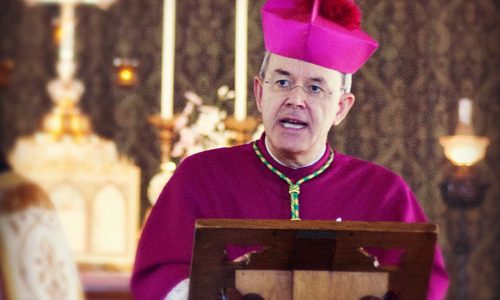
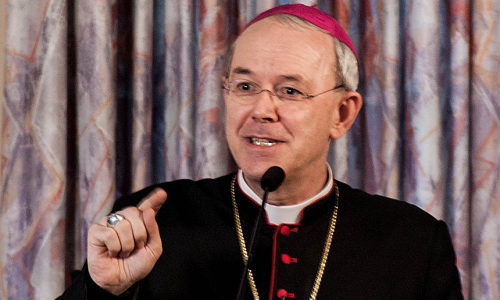
Bishop Schneider called for clear correction of Vatican II misinterpretations, criticized widespread confusion in Church teachings, and urged the faithful to uphold tradition and truth, especially during times of doctrinal crisis.
Bishop Schneider, during his England visit, rejected a Vatican document denying Jewish evangelization, affirming Christ’s command to convert all nations. He also spoke on Eucharistic devotion and Church challenges.
Bishop Schneider condemned a Vatican conference featuring anti-Catholic speakers, warning it undermines faith and morals. The event promoted using children to drive social change and erode traditional beliefs.
Bishop Schneider’s Dominus Est! calls for traditional Communion reverence. A Soviet-born bishop, he defends Catholic teachings, supports Holy Matrimony, and urges the Pope to consecrate Russia to the Immaculate Heart of Mary.
Bishop Schneider preached that the Cross is essential to Christian life. Citing Newman and Vianney, he highlighted suffering's spiritual value, urging the faithful to embrace daily crosses as paths to holiness.
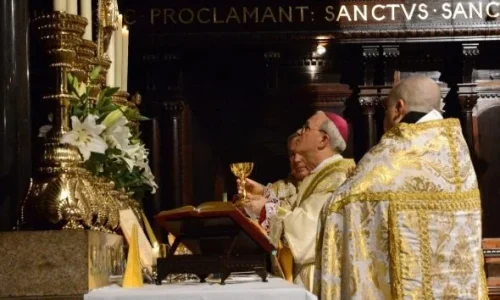
On Wednesday 24th February at 8 pm, there will be sung Compline, Sermon and Benediction, as part of our Lenten exercises. The preacher will be His Lordship Bishop Athanasius Schneider, of Astana, Kazakhstan.
Bishop Schneider warned of faith crises in Church leadership, praised SSPX’s role, emphasized timeless doctrine amid liturgical changes, and encouraged the faithful to defend the faith and correct the pope respectfully when necessary.
Bishop Schneider warns of doctrinal crisis and defends tradition, while Professor Grillo urges progressive liturgical reform, criticizing Liturgiam Authenticam for stifling renewal and calling for a new, more flexible instruction.
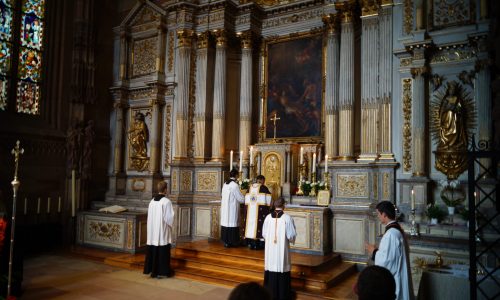
Bishop Schneider will address clergy in Warrington, stressing Christ’s central role in liturgy and evangelization, opposing liturgical practices that diminish God’s presence, as detailed in his book Dominus Est.
Bishop Schneider will visit Traditional Mass centres in Preston, New Brighton, and Warrington in late February, celebrating Mass and speaking. He is an auxiliary bishop and author from the Soviet-born Canons Regular order.
Cardinal Sarah and Bishop Schneider reject intercommunion, affirming Church rules over personal conscience, cautioning against confusion from ambiguous statements, and advocating clear, truthful dialogue with Protestants about Catholic doctrine.
Bishop Schneider denounced efforts to allow Communion for remarried divorcees, calling them deceptive and harmful. He urged clarity, doctrinal fidelity, and lay resistance against moral compromise masked as pastoral compassion.
Moral absolutes protect the Church’s integrity and uphold divine law. Ambiguity in Amoris Laetitia threatens coherence, prompting the dubia to defend truth against subjective morality and doctrinal confusion.
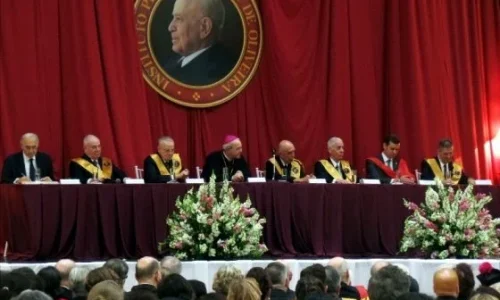
The 20th anniversary of Professor Plinio Corrêa de Oliveira’s death united TFP members worldwide in Brazil, renewing commitment to Catholic ideals, Marian devotion, and the ongoing battle against the Revolution.
The American TFP endorses Bishop Schneider’s statement condemning the Synod’s Final Report for undermining Church teachings on marriage and sacraments through ambiguity and accommodation of modern cultural pressures.
TFP members worldwide gathered in São Paulo to honor Prof. Plinio Corrêa de Oliveira. Events included a Mass, tributes, and discussion of Return to Order, inspired by his 1986 commission.
Bishop Schneider urges faith amid Church turmoil, emphasizing God's plan to purify the Church through faithful laity. He encourages trust in divine will despite growing internal betrayal and confusion.
Bishop Schneider urges faith amid Church turmoil, emphasizing God's plan to purify the Church through faithful laity. He encourages trust in divine will despite growing internal betrayal and confusion.
Bishop Schneider denies supporting the SSPX’s uncanonical status or extreme views, urging respectful critique and eventual reconciliation. He affirms fidelity to Church authority and rejects false portrayals of his position.
Bishop Schneider refutes claims of consensus on controversial Synod proposals, denounces doctrinal compromises, and urges bishops to defend Catholic teaching against internal ideological pressures and errors promoted by clergy.
R.R. Reno condemns Catholic leaders’ silence on moral issues, likening them to apostles who fled Christ. He calls for courageous bishops who defend the faith instead of avoiding controversy.
Bishop Schneider’s 2015 seminary visits advanced informal SSPX-Vatican discussions on liturgy and doctrine. Along with Cardinal Brandmuller’s visit, these meetings aimed to deepen understanding of Tradition and Vatican II issues.
The blog commends Bishop Schneider’s clarity and orthodoxy, criticizes confusion from the Synod, warns of liberal influence within the Church, and expresses hope in faithful bishops and Pope Francis’ adherence to doctrine.
The Synod’s interim report caused confusion and was criticized for misrepresenting Church teaching. Bishop Schneider and others alleged manipulation, highlighting the need for transparency and accuracy in future Synod processes.
Bishop Schneider condemns the Synod’s manipulation and heterodox interim report. He urges Catholics to resist doctrinal confusion, uphold Church teaching, and form study and support groups promoting faith, chastity, and conversion.
Bishop Schneider criticized the Synod’s interim report as heterodox, praised the orthodox final version, and urged Catholics to resist secular ideologies and remain faithful, even when bishops compromise Church teaching.
Bishop Schneider sees a Church crisis rooted in secular compromise and doctrinal erosion. He predicts a split between faithful Catholics and worldly clergy, urging devotion, purity, and fidelity to Catholic teaching.
Bishop Schneider warns of a deep Church crisis rooted in Eucharistic abuse and doctrinal surrender. He calls for fidelity and reverence, foreseeing a split between worldly clergy and faithful Catholics.
Bishop Schneider sees a grave Church crisis, comparing it to past heresies. He criticizes liberal trends, secular influence, and liturgical abuses, yet expresses hope for renewal through traditional Catholic faith.
Bishop Schneider emphasizes reverence for the Eucharist, calling it the “poorest” in the Church. He urges kneeling and tongue reception as key to restoring devotion and renewing the Church.