Bishop Schneider said Dignitatis Humanae isn’t a rupture with Tradition, criticizing Protestant proselytism and affirming that false religions shouldn’t have equal rights to propagate in Catholic-majority societies.
Bishop Schneider said Dignitatis Humanae must align with tradition, affirming that Catholic-majority nations can restrict proselytism by false religions while respecting religious freedom and defending Catholics through preaching and politics.
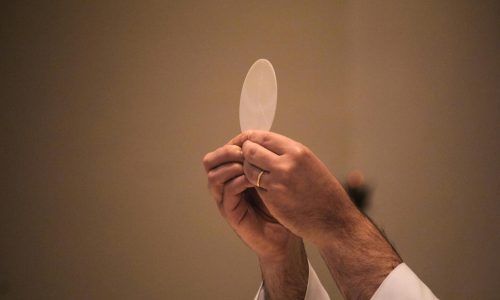
"Dominus Est" asserts Communion-in-the-hand is a Protestant-inspired abuse that undermines Catholic reverence for the Eucharist, urging a return to traditional practices to honor the Real Presence fully.
We recently pointed readers to a partial translation of Bishop Athanasius Schendier's talk, given in Rome, wherein, amongst other things, he mused on the possibility of a new syllabus of errors, pertaining to a rupturist view of the Second Vatican Council.
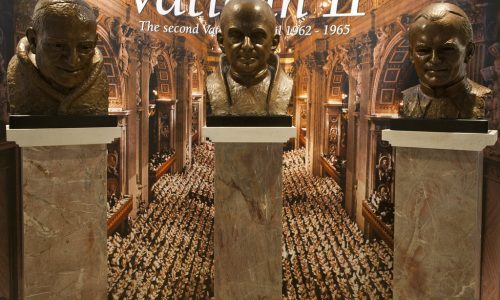
Bishop Schneider urges a new Syllabus to address errors in post-Vatican II interpretations, paralleling Pius IX’s original Syllabus that defended Church doctrine against modernist challenges.
Bishop Schneider will join the Latin Mass Society’s training conference at Downside Abbey, celebrating a Pontifical Mass and lecturing. Priests will receive instruction in the Extraordinary Form, with public Masses available.
Bishop Schneider reflects on attending secret Masses under Communism, fostering Eucharistic reverence. He emphasizes Kazakhstan’s Christian heritage, the effects of atheism, and urges support through prayer, vocations, and church-building efforts.
Bishop Schneider’s book Dominus Est advocates kneeling and receiving Communion on the tongue, rooted in tradition and reverence. At Downside Abbey, he supported priestly training and Eucharistic renewal.
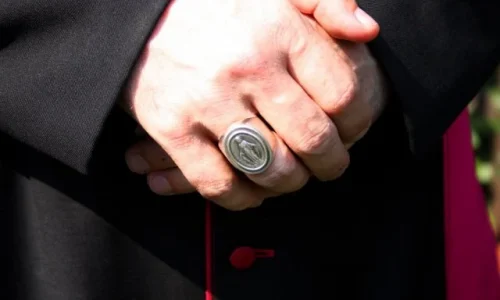
Bishop Schneider discusses Dominus Est on EWTN with Fr. Pacwa. The English edition shows Pope Benedict giving Communion reverently. His episcopal ring, seen at Assumption Grotto, features a Miraculous Medal.
Bishop Schneider celebrated Low Mass at Gesù e Maria in Rome, home to the Institute of Christ the King’s apostolate, now canonically erected. He is known for advocating traditional Communion practices.
Bishop Schneider defends receiving Holy Communion kneeling and on the tongue as a sign of adoration rooted in Church tradition, Scripture, and early Christian practice, fostering deep reverence for the Eucharist.
Bishop Schneider argues for kneeling and receiving Communion on the tongue, stressing external reverence fosters deeper faith. His book Dominus Est seeks to renew awareness of the Eucharist’s sacredness.
Bishop Schneider urges greater reverence at Mass and Communion on the tongue. In Dominus Est, he calls for sacred worship, linking bodily gestures with faith and correcting modern liturgical abuses.
Bishop Schneider shares his vocation story, describes Kazakhstan’s Catholic challenges, emphasizes evangelizing through sacred spaces, and outlines goals including fostering vocations and constructing a Marian shrine in Karaganda.