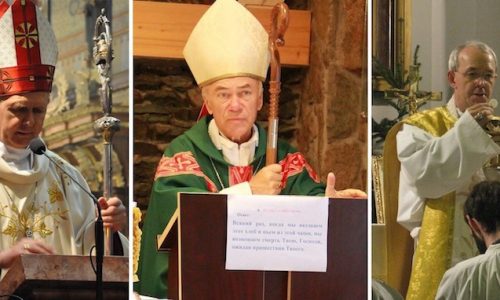
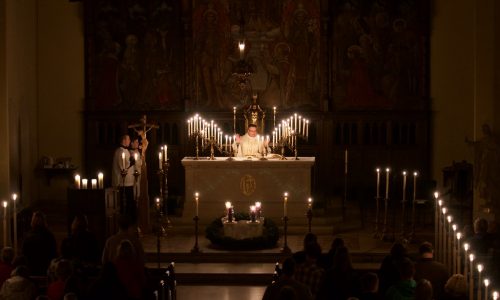
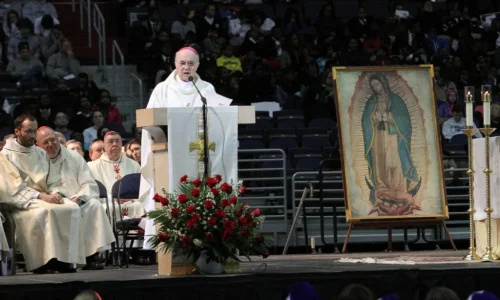
Bishop Schneider’s visit to California drew large crowds to Latin Mass events and conferences, reflecting strong interest in his defense of tradition, shaped by his faith under Communist persecution.
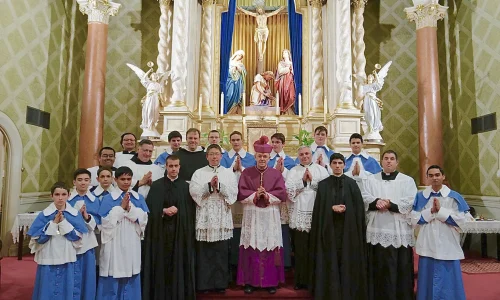
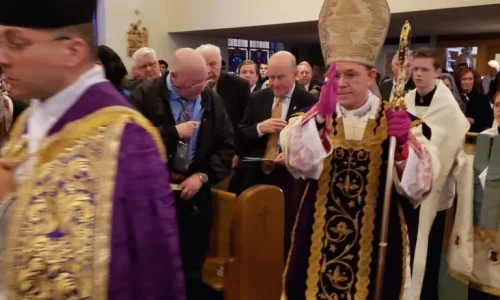
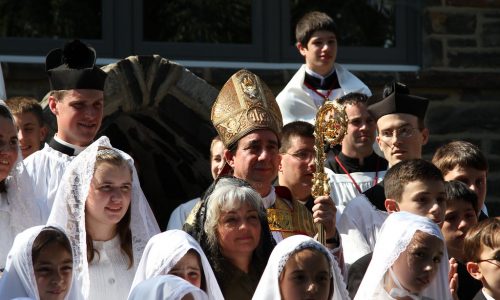
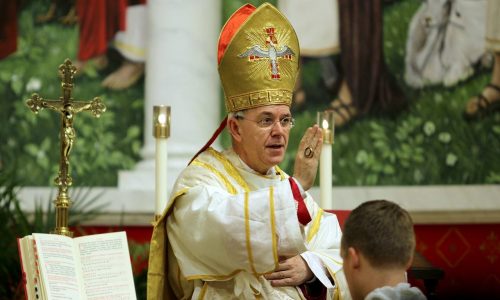
Bishop Athanasius Schneider celebrated a Pontifical Mass at St. Stephen of Hungary Parish in Allentown, PA, drawing faithful from afar. A brunch and talk followed the well-attended liturgical celebration.
Bishop Schneider and others defend Church teaching on marriage through a Profession, opposing Communion for the divorced and remarried, calling bishops worldwide to uphold doctrinal clarity against confusing pastoral norms.
Amoris Laetitia’s guidance on Communion for divorced and remarried Catholics has sparked division among bishops. Some embrace case-by-case discernment; others demand doctrinal clarity, warning against contradictory pastoral practices and confusion.
Bishop Schneider says Amoris Laetitia promotes sin under the guise of discernment, allowing adulterers to receive Communion and threatening Church teaching on marriage, sexuality, and sacramental integrity.
Bishop Schneider urges bishops to defend sacramental marriage by signing a profession opposing Communion for remarried divorcees, warning Amoris Laetitia's norms permit sin and distort Catholic teaching under pastoral pretexts.
Kazakh bishops defend traditional Catholic marriage teaching, opposing Communion for those in adulterous unions. They affirm canon law, stress Church discipline, and advocate respectful dialogue with the pope and prayerful fidelity.
Bishop Schneider respects SSPX, citing papal support and Lefebvre’s prophetic role amid Church crisis. He suggests Lefebvre's endurance may one day mirror Saint Augustine’s vision of faithful suffering within the Church.
Raised under Soviet persecution, Bishop Schneider’s faith was formed by devout parents and rare access to the Eucharist. His early experiences shaped his deep reverence and commitment to Church tradition.
Bishop Schneider and Kazakh bishops reaffirm Church teaching denying Communion to divorced-remarried Catholics living in adultery, urging prayer and faithfulness despite differing public expressions among some local bishops on Amoris Laetitia.
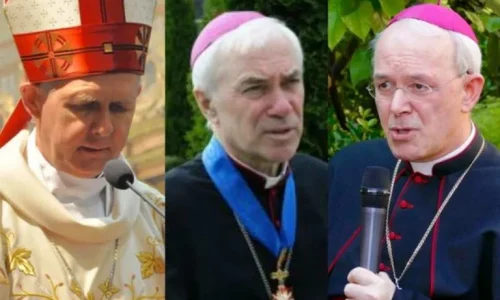
Three bishops publicly upheld traditional Church teachings on marriage and Communion, condemning innovations that permit Communion for remarried individuals living in sin, calling for unified apostolic clarity among global bishops.
The bishops condemned permissive Communion practices for divorced and remarried Catholics, affirming marriage’s indissolubility and urging adherence to Church teaching despite confusion caused by Amoris Laetitia and evolving pastoral norms.
Kazakhstani bishops uphold traditional marriage doctrine, insisting Communion for divorced and remarried Catholics requires annulment or abstinence, responding to controversial pastoral guidelines linked to Amoris Laetitia.
Five bishops restate traditional marriage doctrine, condemning Communion for divorced and remarried Catholics as endorsing divorce, urging broader episcopal support and dialogue on the issue, including addressing the dubia from cardinals.
Five bishops reaffirm that divorced and remarried Catholics must abstain sexually to receive Communion, rejecting recent endorsements, including from Pope Francis, supporting Communion for remarried couples in ongoing sexual relationships.
The decline of Western civilization parallels the destruction of the traditional Mass, which Dr. Senior and others say is the foundation of Christian culture, urging liturgical restoration for spiritual and cultural revival.
Bishop Athanasius Schneider will make his first visit to the Diocese of Charlotte, North Carolina, later this week to offer a Solemn Pontifical Mass in honor of Blessed Karl of Austria. As reported by the Catholic News Herald.
Bishop Schneider called Catholics to unwavering fidelity to the Catholic faith, even martyrdom, warning against heresy and urging defense of the faith, exemplified by martyr Sir John Burke’s steadfastness in 1607.
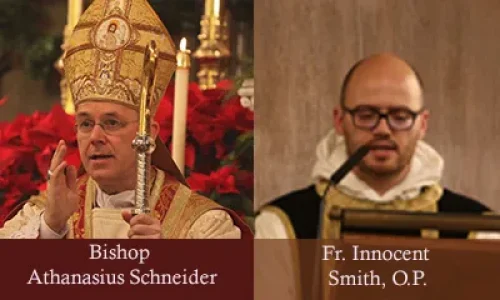
A conference and Mass celebrated the tenth anniversary of Summorum Pontificum at St. Mary’s Church, highlighting the Traditional Latin Mass’s growth and importance, with Bishop Schneider emphasizing tradition in sacred liturgy.
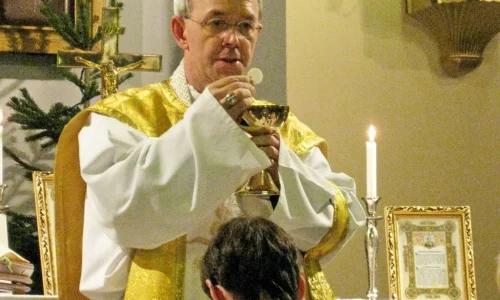
Bishop Schneider and Brian Williams warn that Communion in the hand leads to Eucharistic disrespect. They argue this practice continues from fear of man, not reverence for the Real Presence.
Bishop Schneider warns of Eucharistic profanation from Communion in the hand. Lost fragments are trampled, yet many ignore this. Visible evidence exists. The Church’s silence shows fear of man over God.
Bishop Schneider says priests must follow the Church’s unchanging teaching on Communion, not conflicting commands from superiors. He affirms fidelity to tradition, saints, and past Popes over recent opposing practices.
Bishop Schneider defends truth over silence in Church crises, supports Professor Seifert, warns of relativism in Amoris Laetitia, and praises the dubia cardinals for upholding traditional Catholic doctrine and unity.
Bishop Schneider warned that Amoris Laetitia's approach to discernment may enable adultery, risking souls. He compared it to Eve’s deception by the serpent, calling it pseudo-discernment and spiritually dangerous.
Bishop Schneider criticized Rome's renewed demands on SSPX as anti-pastoral and inconsistent, highlighting leniency toward Orthodox churches and questioning why Vatican II's non-dogmatic teachings are treated as obligatory for recognition.
Bishop Schneider attributes today’s Church crisis to Vatican II's errors, urges reform over rejection, and aligns with Archbishop Lefebvre’s balanced approach—firm in truth, respectful of authority, and open to correction.
Bishop Schneider urges interpreting Vatican II through Tradition, correcting ambiguities without total rejection. He supports SSPX’s integration to aid this process, echoing Archbishop Lefebvre’s gradual, faithful approach to Church renewal.
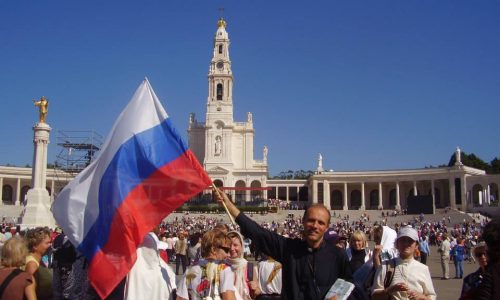
Bishop Schneider supports Cardinal Burke’s appeal for explicitly consecrating Russia, affirming its importance for fulfilling Fatima’s message and bringing grace, Russia’s Catholic conversion, and eventual peace promised by Our Lady.
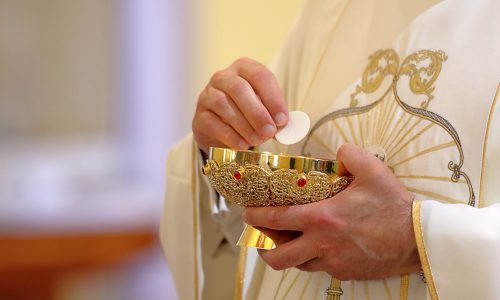
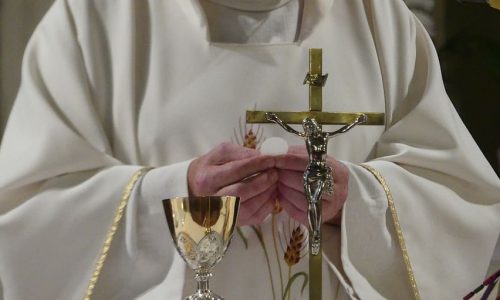
Communion in the hand is discouraged as irreverent. Bishop Schneider advocates for receiving on the tongue, emphasizing Eucharistic reverence, priestly consecration, and restoring practices that uphold Christ’s dignity in the Blessed Sacrament.