The Church’s Magisterium teaches through solemn, universal, and daily forms. Infallibility applies under strict conditions. Faithful teaching requires clarity, tradition, and avoidance of novelty, ensuring protection from error and doctrinal change.
Christ's Gospel is preached through Scripture and Tradition, upheld by the Church. Revelation is taught by the Magisterium, not just written texts. Dogmas develop in clarity, always rooted in apostolic faith.
Knowledge of God is vital for happiness and salvation. Divine revelation completes natural understanding. Faith perfects reason. Private revelations aid devotion but never surpass public revelation fulfilled in Christ and His Church.
Faith unites us with God, begins eternal life, directs our actions, and overcomes temptation. It is a firm, unquestioning assent to divine truth, confirmed by miracles and the Church's teaching.
We are created to glorify God and seek eternal happiness through faith, grace, and obedience. Earthly goods cannot fulfill us. Our true home is heaven; life on earth is a pilgrimage.
Amid widespread religious ignorance, the Church must return to the Roman Catechism. Priests must teach only sound doctrine, ensuring the faithful know Christ and keep His commandments for salvation.
Bishop Schneider highlights society’s secularization and loss of the supernatural, urging Christians to uphold the Catholic faith, resist moral decay, and prioritize spiritual grace over worldly values to restore divine order.
Bishop Athanasius Schneider criticizes Father Martin’s ambiguous words and promotion of homosexual acts, calling them against God’s will and reason. He offers a direct, thought-provoking perspective on Church issues.
Bishop Schneider highlights threats to Christianity from secular ideologies, Neo‑Marxism, and propaganda, urging defense of faith, family, and moral values against societal and political influences.
Bishop Schneider states women cannot serve as deacons or perform liturgical roles at Mass, as this goes against Church tradition and the symbolic role of women as the Bride of Christ.
Bishop Schneider teaches that Christians must uphold supernatural truths, resist modern secularism and materialism, and live faithfully through the Church, sacraments, and traditions in union with God.
Bishop Schneider stresses councils are human, not divine; Scripture and Tradition alone are God’s Word. Pastors must show humility, avoiding excessive human authority and anthropocentric tendencies in the Church.
Bishop Schneider calls for deep adoration of Christ in the Eucharist, urging faithful devotion, humility, and reverence, inspired by saints, the Church’s care, and Christ’s enduring presence in Holy Communion.
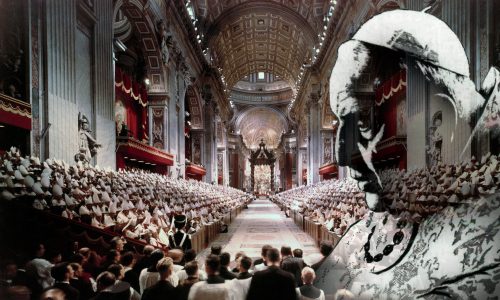
Bishop Schneider teaches that Vatican II affirms the primacy of God’s worship as the basis of pastoral theology, requiring fidelity to doctrine, liturgy, moral truth, penance, and the Church’s mission of saving souls.
Bishop Schneider says the Vatican and bishops must acknowledge that abortion-tainted vaccines should never be used, stressing that the moral issue is paramount and more important than health considerations.
Bishop Schneider urges loyalty to the Church amid trials, stressing its supernatural nature, supremacy over leaders, respectful resistance to heresy, and the need for prayer and reparation for clergy failings.
Bishop Athanasius Schneider shares insights on faith, the priesthood through St. John Chrysostom, the liturgy, and the people’s voice in this lecture. Watch to deepen your understanding of these themes.
Young people embrace faith through truth, beauty, and heroism. This video explores Catholic education, Pope Pius XII’s message, Latin Mass, marriage, guardian angels, and devotion to Mary as spiritual foundations.