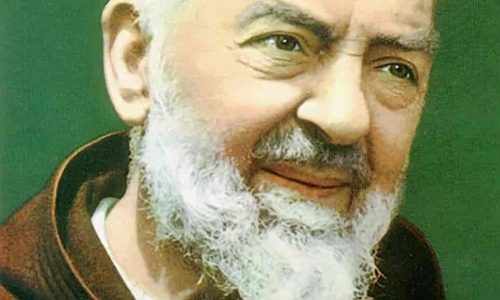
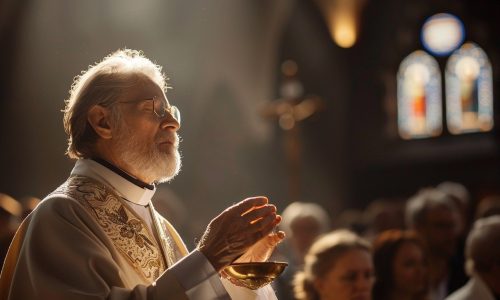
Bishop Schneider states that Saint Pio shows the Holy Mass as the center of Christian life, where the priest acts as alter Christus, leading souls to Christ through Eucharistic sacrifice.
Bishop Schneider states that the loss of the supernatural has led society to replace God with material concerns, weakening faith, corrupting morals, and opposing humanity’s true supernatural destiny in Christ.
Bishop Schneider highlighted the universality of the faith, lamented “liturgical exile” and Eucharistic irreverence, and called for restoration through Eucharistic Adoration, confession, repentance, proper formation, and holy families centered on the Mass and Christ’s presence.
Bishop Schneider supports the Marian Movement, defends traditional Catholic worship, condemns restrictions on the Traditional Mass, warns against errors from the Synod on Synodality, and emphasizes fidelity to divine truth over misguided obedience.
Bishop Schneider stresses protecting Christianity from neo-Marxist and secular influences, advocating fidelity to Church teaching, spiritual vigilance, and faith’s transformative role in guiding society and moral life.
Bishop Schneider condemns Father Martin for promoting homosexual acts, stating they oppose God’s will and nature, harm individuals, and are irresponsible for clergy to encourage, even through pastoral care.
Bishop Schneider stresses hand communion must be reverent and correct, safeguarding the Real Presence, historical continuity, and Church authority, while rejecting improper practices and deviations in liturgy or for children.
Bishop Schneider explains hand communion’s historical practice, proper liturgical form, reverent handling, and participation by children, stressing correct use versus profane practices and continuity with early Church tradition and authority.
Bishop Schneider highlights the necessity of adoration through kneeling and bowing, following biblical examples, and upholding the long-standing Latin rite tradition of receiving Holy Communion on the tongue.
Bishop Schneider warns that Church leaders’ focus on temporal issues undermines faith, stresses the value of traditional Mass, and critiques recent papal decisions as abuses of authority and doctrinal continuity.
Bishop Schneider discusses hand communion, its historical use, correct liturgical form, doctrinal significance, and reverence, highlighting proper practice versus misuse and continuity with early Church tradition and Church fathers.
Bishop Schneider urges faithfulness to the Church as our spiritual mother, stressing resilience, prayer, and resistance to heresy, despite clergy failings, recognizing the Church as the Mystical Body of Christ.
Bishop Schneider stresses that the Church’s mission is to guide consciences, especially in caring for children and their well-being, balancing moral clarity with attention to real-life circumstances.
Bishop Schneider highlights Christ’s Incarnation, sacramental participation, and divine grace while warning against secularism and modern ideologies, calling Catholics to preserve faith, morality, and God-centered social order.
Bishop Schneider warns that synodal practices can threaten Church doctrine and morality, urging bishops to uphold Catholic teaching, resist liberal ideologies, and follow the Holy Spirit’s guidance.
Bishop Schneider highlights a rare papal doctrinal crisis, urging the faithful to respond with admonition, prayer, and reparative acts, citing historical precedents like Pope Liberius and John XXII.
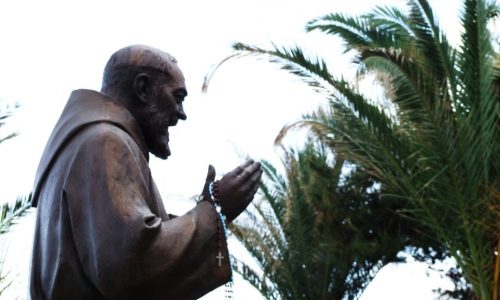
Bishop Schneider focuses on Padre Pio’s dedication to the Mass and confession, teaching the reality of sin, purgatory, and salvation, showing priests’ role in guiding souls through divine grace.
Bishop Schneider regards Jesus as his God, Lord, and Savior, with the Eucharist central to his faith, sustaining his spiritual life and devotion, and renewing both personal holiness and the Church.
Bishop Schneider stresses that deliberately breaking God’s commandments, particularly on Sundays, is grave sin, and receiving Communion requires confession, proper disposition, and reverent adherence to Scripture and Saint Paul’s instructions.
Bishop Schneider stresses the Eucharist’s divinity and cautions that Communion in the hand risks fragment loss, theft, and diminished reverence, urging solemn, sacred gestures to honor Christ’s presence.
Bishop Schneider warns against denying hell, criticizes unclear moral guidance and clergy responses to homosexuality, notes the Church’s crisis of relativism, yet affirms the Holy Spirit’s role in its gradual renewal.
Bishop Schneider affirms Communion in the hand is allowed but must be done reverently, symbolizing offering oneself to Christ, contrasting Protestant forms, and preserving respect for the Eucharist’s sacredness.
Bishop Schneider cites four great Church crises, Arianism, the dark century, the Avignon exile, and today’s relativism, and believes the Holy Spirit will renew the Church through humble, faithful people despite current disorder.
Bishop Schneider teaches that obedience belongs first to God, not absolutely to Church or civil leaders. When authority contradicts divine law or harms faith and worship, disobedience becomes a duty to preserve truth.
Bishop Schneider warns of modern coordinated control, urges global resistance to protect human freedom, and criticizes Pope Francis for prioritizing worldly concerns over the Church’s spiritual mission of prayer and gospel truth.
Bishop Schneider stresses the Church’s primary mission is guiding souls and administering sacraments. Social justice is secondary, mainly the laity’s concern, while clergy focus on eternal salvation and God’s mysteries.
Bishop Schneider teaches obedience must follow God, not temporary Church authority. Catholics cannot obey directives undermining divine law, like suppressing the Traditional Latin Mass, but must uphold tradition prudently and reverently.
Bishop Schneider critiques secularism, liberalism, and gender ideology in the Church, calling for fidelity to revelation, moral truth, sacramental life, and authentic Catholic mission while rejecting relativism and worldly influence.
Bishop Schneider says societies collapse when they deny God’s design. He warns modern globalism and technology create control and slavery, limiting human freedom under the appearance of order and benevolence.