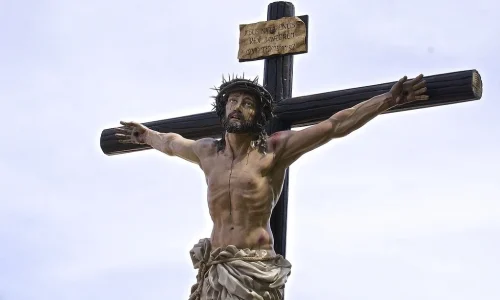
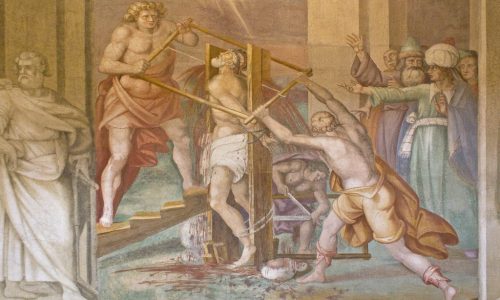
No Greater Love explains the Church’s teaching on martyrdom, describing the witness of martyrs and the call for every Christian to offer life in love while pursuing holiness with courage and fidelity.
Bishop Schneider describes the Church’s crisis as relativism and Pelagianism, urges adherence to unchangeable truth, liturgical peace, and Christian family life, warns of Islamization, and cites youth and seminarians as hopeful signs.
Bishop Schneider urges laypeople to aid the Church through love, sufferings, study of Scripture and the Fathers, prayerful family life, and devotion to guardian angels to grow in holiness and faith.
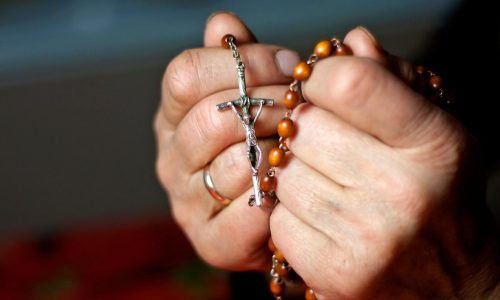
Bishop Schneider warns of a deep Church crisis and urges a global Rosary crusade, trusting Mary’s promise, to pray for renewal of the Holy See and the gift of popes.
Bishop Schneider calls for Pope Francis to retract errors, restore traditional liturgy and sacraments, defend the Catholic faith, and prays for a holy, faithful successor to strengthen the Church.
Bishop Schneider emphasized that the 1965 Mass represents Vatican II’s intent, criticized Bugnini’s manipulations, and requested Pope Leo issue an apostolic constitution to ensure liturgical continuity and honor the Council’s true authority.
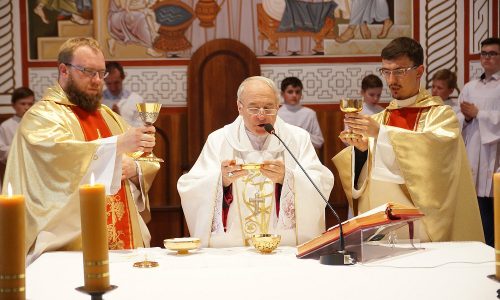
On the Feast of the Assumption 2025, Bishop Athanasius Schneider celebrated ordinations in Puma, Tanzania, ordaining priests and deacons, and delivered a sermon affirming commitment to traditional doctrine and liturgy.
Bishop Schneider critiques the Novus Ordo Mass as anthropocentric and Protestant-influenced, advocating a gradual “reform of the reform” to restore Christ-centered sacrifice and traditional liturgical elements.
Bishop Schneider argues Vatican II unnecessarily altered sacramental formulas. While valid, rites like Confirmation, ordination, and penance were changed, giving the impression older forms were flawed, contrary to tradition.
Bishop Schneider urges sacred music, Gregorian chant, Latin in Mass, and traditional liturgy to restore Church justice and peace, asking prayers for Pope Leo to guide and strengthen faith.
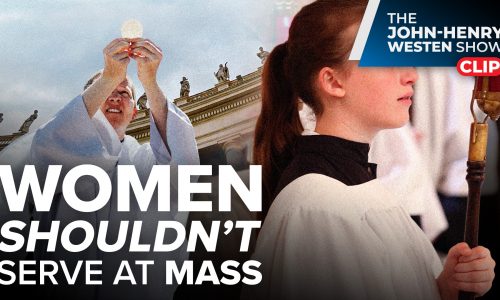
Bishop Schneider asserts women should embody Mary’s supportive, humble role in the Church, avoiding altar service or Scripture reading, warning that liturgical feminism could eventually lead to female priests or a lady Pope.
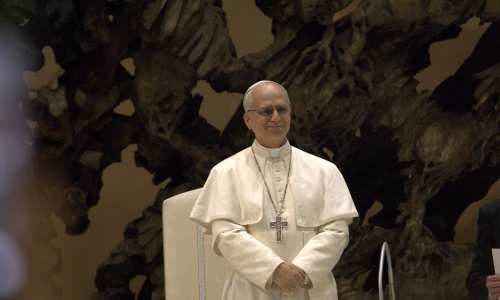
Bishop Schneider discuss Pope Leo XIV, Cardinal Zen’s critique of Synodality, and Cardinal Roche’s remarks on Vatican II and the Old Mass, highlighting challenges to traditional liturgy in the Church.
Bishop Schneider calls for Novus Ordo reform, defending the Traditional Latin Mass, restoring Christ-centered worship, reverence, and clarity, and correcting doctrinal confusion caused by Vatican II ambiguities and false synodality.
Bishop Schneider urged respect for traditional liturgy, careful episcopal appointments, and Pope Leo XIV’s support. He stressed defending Catholic faith, rejecting heresy, and granting freedom for historic Mass practices to renew the Church.
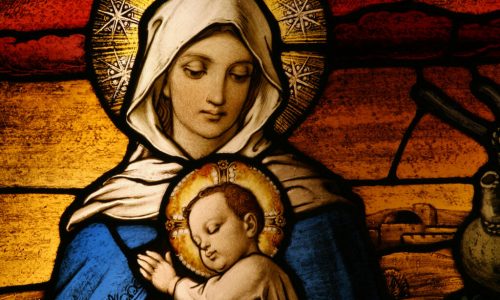
Bishop Schneider praises devout lay Catholics, defends Marian titles coredemptrix and Mediatrix, critiques modern doctrinal minimalism, and stresses adherence to traditional Church teachings while allowing careful, patient development of Marian doctrine.
Lay people help the Church through reparation by offering sufferings and acts of love united with Christ. God values the contributions of the “little ones,” who have upheld the faith during past crises.
Mary, suffering spiritually with Christ, is the queen of martyrs. Bishop Schneider condemns the Vatican’s rejection of Co-Redemptrix and Mediatrix, calling it a disruptive and unprecedented break in Church tradition.
Bishop Schneider says Pope Francis’ confusing pontificate hindered Charlie Kirk from joining the Catholic Church, suggesting that a clear, strong pope defending Church teachings could have brought him into the faith.
Bishop Schneider reflects on underground Church experiences, modern and historical martyrdom, defending Christ’s teachings, and spiritual sacrifice, highlighting inspiration from martyr priests and Our Lady as Queen of Martyrs.
Bishop Schneider condemns the Vatican’s doctrinal note as minimizing Mary’s role. He defends her titles Co-Redemptrix and Mediatrix, affirmed by Church tradition, and calls for renewed theological reflection and Marian devotion.
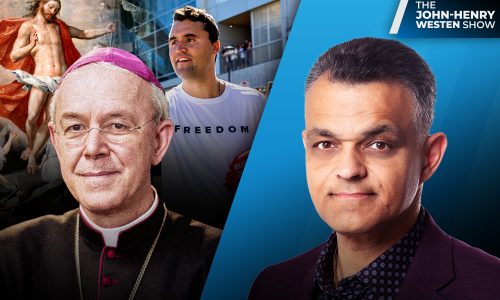
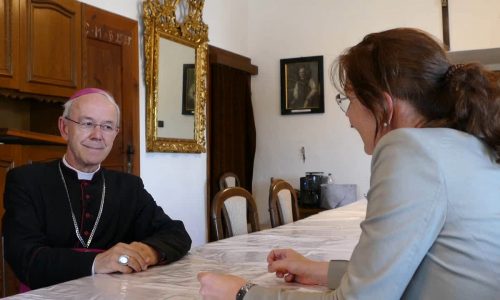
Joining me on this episode of The John-Henry Westen Show is Bishop Athanasius Schneider, auxiliary bishop of Astana, Kazakhstan. We discussed his new book on Christian martyrdom, No Greater Love: The True Meaning of Martyrdom.
Bishop Schneider defends Catholic tradition, the Latin Mass, and true doctrine against relativism, urges fidelity to divine revelation, and highlights martyrdom as supreme love, witness to Christ, and hope for the Church’s renewal.
Bishop Athanasius Schneider discusses Salve Regina, stressing the Rosary’s power, Mary’s intercession, the importance of holy Church leaders, and calls men to spiritual leadership in their families through prayer.
Bishop Schneider affirms the Holy Mass as the Church’s heart, defends the traditional rite, and warns against relativism and gender ideology, calling for courageous bishops, faithful families, and perseverance in Catholic faith.
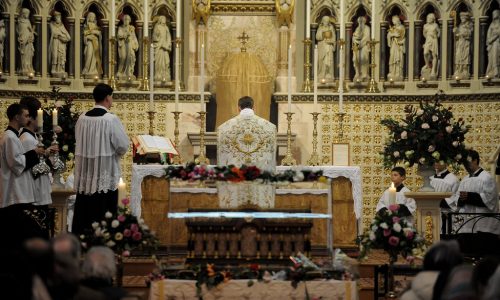
Bishop Schneider emphasizes that the Holy Mass is the heart of the Church, the center of faith and ecclesial life, preserved through tradition and oriented entirely toward Christ.
Bishop Schneider stresses Eucharistic reverence, doctrinal clarity, and moral truth, warning against relativism, sacramental abuse, and gender ideology, and calling for fidelity to Catholic teaching and perseverance in faith.
Bishop Schneider recounts the Catholic minority in Kazakhstan, formed through communist deportations and persecution, emphasizing the suppression of religion and the perseverance of faith amid suffering and religious marginalization.
The Society of St. Pius X is not schismatic; papal approval was sought, excommunications were lifted, and priests now have faculties for confession and marriage, highlighting pastoral care over rigid legalism.
Bishop Schneider urges resisting errors in the Church, rejecting claims denying Pope Francis’ legitimacy. Catholics are called to uphold truth, shine light in darkness, and remain faithful to the Church’s teaching.
Bishop Schneider says Scripture is silent on Communion in the hand. The apostles were priests, and labete means “receive,” emphasizing Holy Communion as a spiritual, not physical, reception.