Bishop Schneider warns that ambiguous Church documents contradict divine law and moral teaching. Catholics must uphold authentic Magisterium, reject relativism, and resist errors on marriage, sexuality, and moral clarity.
Bishop Schneider denounces a Vatican document as approving grave sins and promoting a globalist agenda, calling it blasphemous and urging bishops and the faithful to acknowledge its seriousness and not remain silent.
Papal infallibility is limited, applied only in clearly defined situations. Popes act humanly, with measures and conditions determining its exercise, ensuring it follows tradition and is not automatic in all matters.
Bishop Schneider highlights Church authority: apostles, bishops, and the Pope act per Christ’s mission. Respect, adherence to norms, and proper procedure are essential, with disobedience addressed according to tradition.
Blessings for same-sex unions contradict God’s will and nature. Individuals may receive grace for chastity, but couples cannot be blessed, as doing so would be harmful, deceitful, and sinful.
Bishop Schneider warns of Freemasonry’s influence in the clergy, noting support from a Vatican priest, and critiques naturalistic interpretations of the Gospel, affirming Christ’s death serves human souls, not ecology.
Even if Pope Francis’s election were invalid, history shows such cases were accepted by the Church. Today, all cardinals recognize him as the de facto valid Pope.
The Church never officially taught that a heretical Pope loses office. Only Pope Paul IV’s 16th-century bull addressed this, while the magisterium never definitively promoted this opinion.
Claims of Pope Francis’s invalidity contradict Church tradition. Laypeople should pray, study Church teachings, and respectfully correct errors, trusting in God, while recognizing historical practice affirms de facto papal authority despite mistakes.
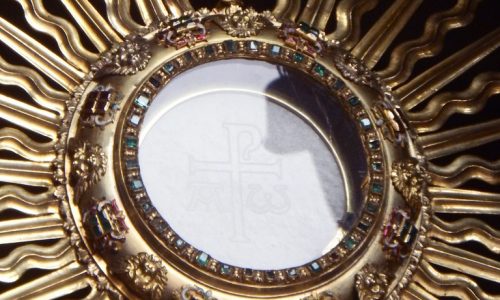
Bishop Schneider sees Eucharistic miracles as God’s grace confirming the Real Presence, countering a crisis of diminished faith, and calls for devotion, adoration, and restoration of reverence in the Eucharist.
Christ is king over all creation and society. Societies rejecting Him face decay. Catholics should uphold natural law, restore Christian culture, form prayer groups, and proclaim Christ publicly.
Bishop Schneider urges a Christ-centered Church, reverent Eucharist, clear teaching, holiness, and defense of doctrine. Simple practices like adoration, catechesis, and family formation restore faith amid modern misunderstandings and ideologies.
Bishop Athanasius Schneiderwarns against abandoning the Church, links modernist trends to Freemasonry, critiques Communion in the hand, and urges fidelity, prayer, and defense of Catholic doctrine against relativism, apostasy, and idolatry.
Bishop Schneider warns against Communion on the hand, affirms the traditional Latin Mass’s reverence, urges youth to witness Christ courageously, and emphasizes the sacredness of life and openness to God’s plan.
Bishop Schneider emphasizes that Christ is fully present in the Eucharist, regardless of appearances, and the faithful must always respect and recognize the host as sacred and divine.
Bishop Schneider condemns relativism in doctrine, morality, and liturgy, affirms Christ’s exclusivity, defends traditional sacraments and Mass, and warns against misreading documents like Abu Dhabi, emphasizing fidelity to the Catholic Church.
Bishop Schneider calls for fidelity to Catholic teaching, moral discernment, and adherence to Christ’s guidance, highlighting the need to confront societal pressures while upholding Christian principles.
Bishop Schneider underscores that liturgical and doctrinal authority is bound by Church law and divine order; personal power, manipulation, or control over Mass and the faithful is not permissible.
Bishop Schneider addresses the Church’s crisis, affirming Christ’s kingship, doctrinal fidelity, liturgical tradition, and the faithful’s duty to preserve truth amid confusion, errors, and ambiguous ecclesial actions.
Bishop Schneider stresses the Mass as the true representation of Christ’s sacrifice, the Eucharist as a sacrament, and the necessity of faith in His real, sacramental presence in the Church.
Bishop Schneider calls for faithful Catholic practice, proper priestly formation, adherence to tradition, and courageous episcopal leadership to preserve doctrine, liturgy, and family-based transmission of faith against modern errors.
Bishop Schneider critiques post-Vatican II Church crises, attributing them to anthropocentrism, loss of God-centered liturgy, and diminished sacrificial Mass, advocating gradual reforms to restore reverence, tradition, and spiritual renewal.
Bishop Schneider warns that Communion in the hand, though permitted, can undermine Eucharistic reverence, calling for deeper reflection and gestures of worship to honor Christ truly present in the Host.
Bishop Schneider warns that the “Great Reset” promotes globalism and gender ideology to uproot people from family, nature, and faith, enabling manipulation and opposing God’s created order and human dignity.
Bishop Schneider warns that widespread contraception among Catholics weakens faith, reduces families, and sets a poor example, emphasizing clergy must clearly uphold Church teaching, as St. John Paul II advocated.
Bishop Schneider rejects the idea that all go to heaven, emphasizing hell’s reality through Scripture and warning that minimizing eternal consequences is morally irresponsible and endangers souls.
Bishop Schneider links German bishops’ allowance of Communion for the divorced to relativism, Gnostic dualism, poor seminary formation, and weak personal faith, leading to contradictions in their understanding of marriage and the Eucharist.
Bishop Schneider stresses that Vatican II must be interpreted in continuity with Church tradition, clarifying issues like collegiality, worship, ecumenism, and religious liberty to prevent misinterpretations and maintain Catholic truth.
Bishop Schneider distinguishes obedience to the Pope: required in administrative matters but not when his actions or teachings contradict divine truths, Church discipline, or sacred rites like the Traditional Latin Mass.
Bishop Schneider explains progressive ecclesial liberalism as clerics prioritizing worldly approval and personal gain over God, yielding to worldly temptations, which underlies the Church’s crisis and rejection of divine truth.