Bishop Schneider rejects the idea that all go to heaven, cautions against exaggerated approaches to homosexuality, and describes a crisis of relativism in the Church, while affirming hopeful signs of renewal by the Holy Spirit.
Bishop Schneider emphasizes preserving constant Church doctrine and traditional liturgy, warns against relativism, and stresses spiritual preparation, the Latin Mass, and adherence to divine law over blind obedience or ambiguous directives.
Bishop Schneider highlights the devotion he witnessed in Scotland, stresses Eucharistic reverence and kneeling Communion, calls for deeper catechesis in schools, and shares plans to celebrate traditional Mass and speak about family and underground Church experiences.
Bishop Schneider emphasizes maintaining apostolic Catholic doctrine, sacraments, and liturgy. He warns against relativism, moral laxity, and deviations, stressing the Church’s unity and faithful guidance under bishops and clergy.
Bishop Schneider says Pope Francis promotes heresies de facto through approving norms on Communion for the divorced and remarried. He emphasizes that ordinary papal Magisterium can err and clarifies true papal infallibility.
Bishop Schneider stresses interreligious dialogue must uphold Christian doctrine, truth, and sacraments. Dialogue should be respectful but faithful, avoiding relativism, and maintaining the unity and mission of the apostolic Church.
Bishop Schneider describes his underground ministry in Soviet Kazakhstan, celebrating Mass and preserving Eucharistic reverence, demonstrating courage, faithfulness, and devotion under persecution.
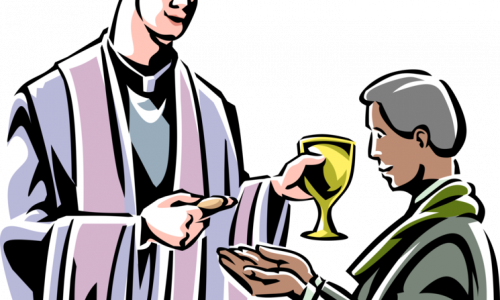
Bishop Schneider emphasizes sacramental communion’s importance, warns against communion in the hand profaning the Eucharist, and encourages the faithful to receive kneeling and on the tongue, preserving reverence and belief in the Real Presence.
Bishop Schneider highlights the Holy Mass’s centrality, urging active, prayerful participation, awareness of heavenly presence, inspiration from saints, and devotion to Communion to restore the Church amid contemporary crises.
Even in attentive parishes, Catholic teaching is distorted. Movements following the pope spread inconsistently, with no clear pattern, and some people resist, causing irregular shifts in faith practice.
Priests should not obey bishops who contradict the faith or sacraments. Long-standing practices, like receiving Communion on the tongue, are lawful and reverent, and honoring them is not disobedience.
Bishop Schneider explains Padre Pio’s devotion to Mass and confession, emphasizing mortal sin, purgatory, and hell, urging the faithful to live seriously, trusting God’s mercy, and preparing for divine judgment.
Bishop Schneider states that hand communion lacks historical basis, with older traditions placing the host directly into the mouth. Claims supporting hand communion are weak and lack strong liturgical authority.
Bishop Schneider emphasizes the courage, moral strength, and steadfast faith needed by Church leaders to uphold Catholic teaching and Christian life amid persecution and societal challenges.
Bishop Schneider argues that the synodal process weakens Church authority, promotes doctrinal confusion, and supports heterodox ideas. He urges adherence to traditional faith, liturgy, and clear moral teaching against a worldly, ambiguous “synodal” model.
Bishop Schneider stresses fidelity to the Church’s thousand‑year tradition, defending the traditional liturgy and doctrine while rejecting false reforms, innovations, and interpretations that contradict historical Catholic faith and sacramental continuity.
Bishop Schneider recalls the underground Church under persecution, stressing faith formation, Eucharistic devotion, and courage to preserve Christianity amid hostile societies and political pressures.
Bishop Schneider teaches that priests must imitate Christ fully, uphold traditional faith and liturgy, endure persecution, and foster holiness to guide souls toward God.
Bishop Schneider calls for renewed reverence toward Holy Communion, stressing exterior signs of adoration, defending Communion on the tongue, and urging catechesis to restore deep Eucharistic devotion.
Bishop Schneider defends Communion rights, rejects admitting adulterers to Communion, and warns that misapplying Amoris Laetitia causes confusion, relativism, and undermines divine moral law and the Eucharist.
Bishop Schneider warns that modern episcopal appointments favor compromise candidates who undermine the faith, unlike careful historical practices, and argues vacant dioceses are preferable to weak bishops promoting ambiguity or modernism.
Bishop Schneider denounces restrictions on the traditional Latin Mass, weak episcopal authority, and heretical clergy promotions, urging the Pope to defend traditional rites, uphold Church teaching, and prevent ideological and moral corruption.
Bishop Schneider explains the Pope’s visit brings encouragement, affirms respectful fraternal correction, emphasizes the Pope’s role in transmitting the Catholic faith, and urges prayer for clarity amid confusion in the Church.
Bishop Schneider calls the Dubia a heroic effort to clarify faith but criticizes Pope Francis’ vague and confusing answers, urging prayer for clearer guidance for the Church and future generations.
Bishop Schneider cites Pope Francis, saying the laity may respectfully but insistently challenge pastors when spiritual nourishment is lacking, seeking the truth necessary for their faith.
Bishop Schneider explains that the Mass is a mystery of faith where Christ acts, making present His sacrifice and true Body and Blood, uniting heaven and earth in worship.
Bishop Schneider states that the Mass is a mystery of faith where Christ acts, making present the sacrifice of the Cross sacramentally, as one of the seven sacraments instituted by Christ.
Bishop Schneider teaches that Christ is the true actor in the Mass, with the priest serving instrumentally, and that the heavenly Church, angels, and saints participate in the liturgical offering.
Bishop Schneider states Amoris Laetitia is not magisterial, cautions against altering divine moral law, highlights existing schismatic tendencies, and urges clergy and laity to remain faithful while praying for the pope.
Bishop Schneider explains that only formal ex cathedra pronouncements are infallible, citing historical examples, and stresses that divine guidance preserves the Church’s continuity despite errors in other papal acts.