Bishop Schneider teaches obedience must follow God, not temporary Church authority. Catholics cannot obey directives undermining divine law, like suppressing the Traditional Latin Mass, but must uphold tradition prudently and reverently.
Bishop Schneider critiques secularism, liberalism, and gender ideology in the Church, calling for fidelity to revelation, moral truth, sacramental life, and authentic Catholic mission while rejecting relativism and worldly influence.
Bishop Schneider says societies collapse when they deny God’s design. He warns modern globalism and technology create control and slavery, limiting human freedom under the appearance of order and benevolence.
The Holy Eucharist expresses full unity with the Church. Non-Catholics rejecting any dogma, including on the Eucharist, Mary, or the papacy, cannot receive it without contradicting the Church’s truth.
Schneider highlights his experience in the underground Church and urges Catholics to remain faithful to the Traditional Latin Mass, honoring centuries of heritage and safeguarding it for future generations.
Bishop Schneider denies that Constantine introduced an ecclesial rupture, calling such claims mythical. He affirms doctrinal and liturgical continuity before and after Constantine and rejects narratives of degradation or Protestantization.
Bishops and cardinals fear media attacks that can destroy reputations or offices. Schneider emphasizes prioritizing eternity over temporal concerns, citing St. Thomas More’s refusal to compromise conscience for temporary freedom.
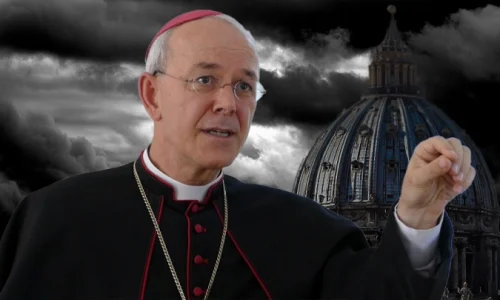
Bishop Athanasius Schneider shares insights on faith, the priesthood through St. John Chrysostom, the liturgy, and the people’s voice in this lecture. Watch to deepen your understanding of these themes.
Bishops and cardinals fear media defamation that can ruin reputations or positions, but Schneider urges prioritizing eternity over worldly office, citing St. Thomas More as a model of conscience above temporal concerns.
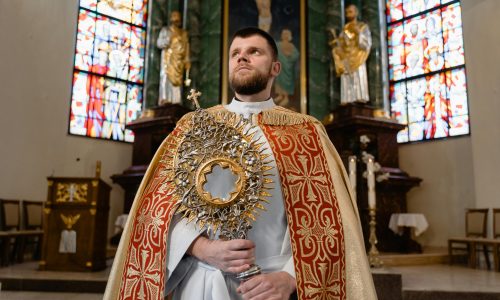
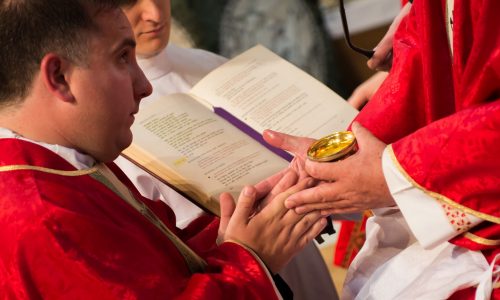
Bishop Schneider warns that receiving Communion in the hand undermines reverence, risks host loss or theft, and diminishes adoration, urging the faithful to treat the Eucharist with solemnity, kneeling and profound respect.
Bishop Schneider criticizes receiving Communion in the hand, introduced illicitly in the Netherlands and later permitted by the Pope, as undermining reverence, devotion, and signifying a significant crisis within the Church.
Bishop Schneider warns against attending Masses with female deacons, noting post-Vatican II practices in the West allow women roles traditionally reserved for clergy, contrary to longstanding Church and Oriental traditions.
Bishop Schneider reflects on The Springtime That Never Came and The Catholic Mass, addressing major challenges in the Church and society while offering insightful perspectives that inspire reflection on faith and tradition.
Bishop Schneider argues that councils are human and only assisted by the Spirit, not divine revelation. Scripture and Tradition alone are God’s Word, requiring pastoral humility and rejection of ecclesial anthropocentrism.
Bishop Schneider emphasizes reverent reception of Holy Communion, citing Church Fathers, historical practices, and the spiritual necessity of humility and childlike disposition, contrasting this with the modern practice of Communion in the hand.
Bishop Schneider notes rising relativism and end-time signs but urges vigilance and hope, trusting God may grant renewal and peace through Our Lady of Fatima’s requested consecration and Russia’s conversion.
Bishop Schneider cites St. Paul’s correction of St. Peter, urging popes to accept public correction amid today’s global crisis of faith, where core doctrines and moral truths face widespread confusion.
Bishop Schneider sees the Church’s crisis as a path to renewal, guided by the Holy Spirit through humble, hidden instruments. He urges patience and faith in God’s work of restoration.
Bishop Schneider urges Catholics to trust Christ’s guidance of the Church, remain faithful amid confusion, pray for renewal in leadership, and see present trials as divine means for strengthening faith and spiritual reward.
Bishop Athanasius Schneider answers questions from the faithful in a live stream, discussing his books, the social kingship of Christ, and the Luminous Mysteries. Viewers may find their questions addressed.
Bishop Schneider stresses Christ’s full presence in every host fragment, warning that Communion in the hand risks loss, theft, and reduced reverence, calling for deeper reflection and greater gestures of adoration.
Bishop Schneider emphasizes reverence for the Eucharist, rejecting Communion in the hand due to loss of fragments and reduced adoration. He calls for kneeling Communion on the tongue to honor Christ’s real presence.
The Church, guided by Vatican II, prioritizes God’s worship, evangelization, penance, and laity’s apostolate, defending doctrinal truth, promoting holiness, and responding faithfully to secular challenges and moral errors in society.
Bishop Schneider calls for deep faith, love, and reverence toward Jesus in the Eucharist, emphasizing Christ’s real presence, kneeling, adoration, and devotion during Mass and Holy Communion, as modeled by saints and angels.
Bishop Schneider calls youth to spiritual heroism and fidelity to Catholic tradition, urging purity, devotion, and daily prayer, supported by guardian angels and the Blessed Virgin Mary in defending faith and truth.
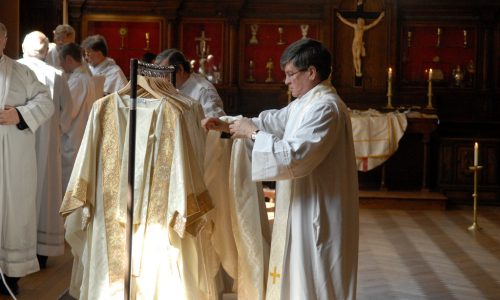
Bishop Schneider describes summer celebrations with a Pontifical Mass, highlighting the bishop’s role, hidden practices, Christopher’s participation, village involvement, invitations, and notable events, including a fire during the gathering in Poland.
Bishop Schneider criticized Synod manipulation and rejection of moral doctrine, reaffirming marriage’s indissolubility. He urged Catholics to uphold Church teaching, form faithful communities, and resist clerical compromise with gender ideology and moral relativism.
Bishop Schneider’s Credo seeks to dispel doctrinal confusion and moral relativism, reaffirming Catholic truth on faith, morals, and creation while addressing modern challenges like gender ideology and urging renewed prophetic clarity and worship.
Bishop Schneider denounces Fiducia supplicans for contradicting God’s law on marriage, urging bishops to reject it and priests to refuse such blessings, warning it spreads doctrinal confusion and moral relativism within the Church.