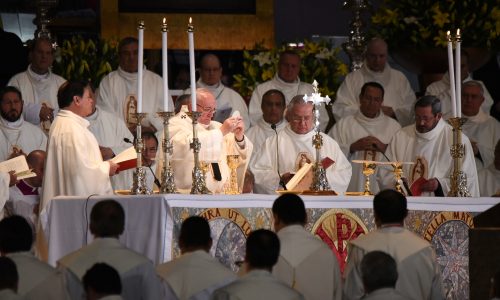
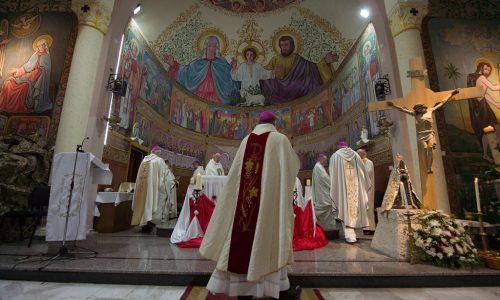
The Novus Ordo's offertory prayers focus on a banquet rather than the Mass as a sacrifice, resembling Protestant views. The Second Eucharistic Prayer is criticized for brevity and lacking sacrificial emphasis. Traditional prayers should be restored to highlight the sacrificial nature of the Mass.
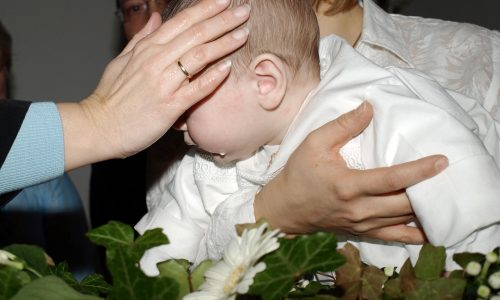
The Church teaches that a child should not be baptized against the parents' will, except in danger of death. In such cases, any Catholic can baptize the child for the beatific vision. Otherwise, relatives should discuss with the parents or wait for another opportunity.
The Church teaches that salvation is through Christ alone. Those ignorant of the faith but seeking God's will may be saved by His grace. Evangelism is essential to share Christ's truth.
This instance of infallibility occurs when the Pope clearly intends to obligate all Catholics to adhere to a specific teaching that he has definitively proclaimed.
The Church teaches that infallibility means the Pope, guided by the Holy Spirit, cannot err in definitive ex-cathedra declarations. If he speaks ambiguously, Catholics are not obligated to follow, and corrections are allowed.
Mothers and grandmothers are urged to pray for children or grandchildren who have abandoned the faith, invoking Guardian Angels and consecrating them to the Immaculate Heart of Mary for protection and guidance.
The lay faithful should pray for bishops and priests who have lost faith, seeking God's mercy for their conversion, as only divine intervention can restore their spiritual sight, beyond humanitarian efforts.
Inviting angels to join in prayer is encouraged, as saints have practiced it. Scripture mentions angels carrying prayers to God, and during Mass, angels are invited to participate, enriching private prayer.
On Sundays, avoid unnecessary work and intense physical exertion to honor its holiness. The day should be dedicated to rest and glorifying God, with moderate exercise acceptable to maintain focus.
The Church teaches that self-defense is morally permissible in extreme situations, such as protecting family or defending a congregation from harm. Defense should be limited to preventing serious harm, avoiding excessive violence.
Mass for the repose of a soul focuses on expiating personal sins, especially for those in Purgatory. Unbaptized children aren’t condemned, but their fate remains unclear. It’s meant for grave sinners' forgiveness.
"Donum Vitae" condemns in vitro fertilization as immoral due to risks to embryos and women's exploitation. While saving embryos through implantation is possible, adoption could save their lives in some cases.
It’s not a mortal sin, but an omission. Advise the parents on their error, then fulfill your duty. Pray for your niece’s guidance and salvation; penance is optional, prayer is sufficient.
Vatican II was a pastoral council addressing contemporary issues. While most teachings are valid, some, like those of religious liberty and interfaith worship, may be revised. Traditional Church teachings remain authoritative.
"Lumen Gentium" 16's suggestion of Catholics and Muslims worshiping together is ambiguous. Catholics worship God through baptism, while Muslims' understanding of God, based on the Quran, is incomplete and erroneous.